
Last updated November 15, 2026
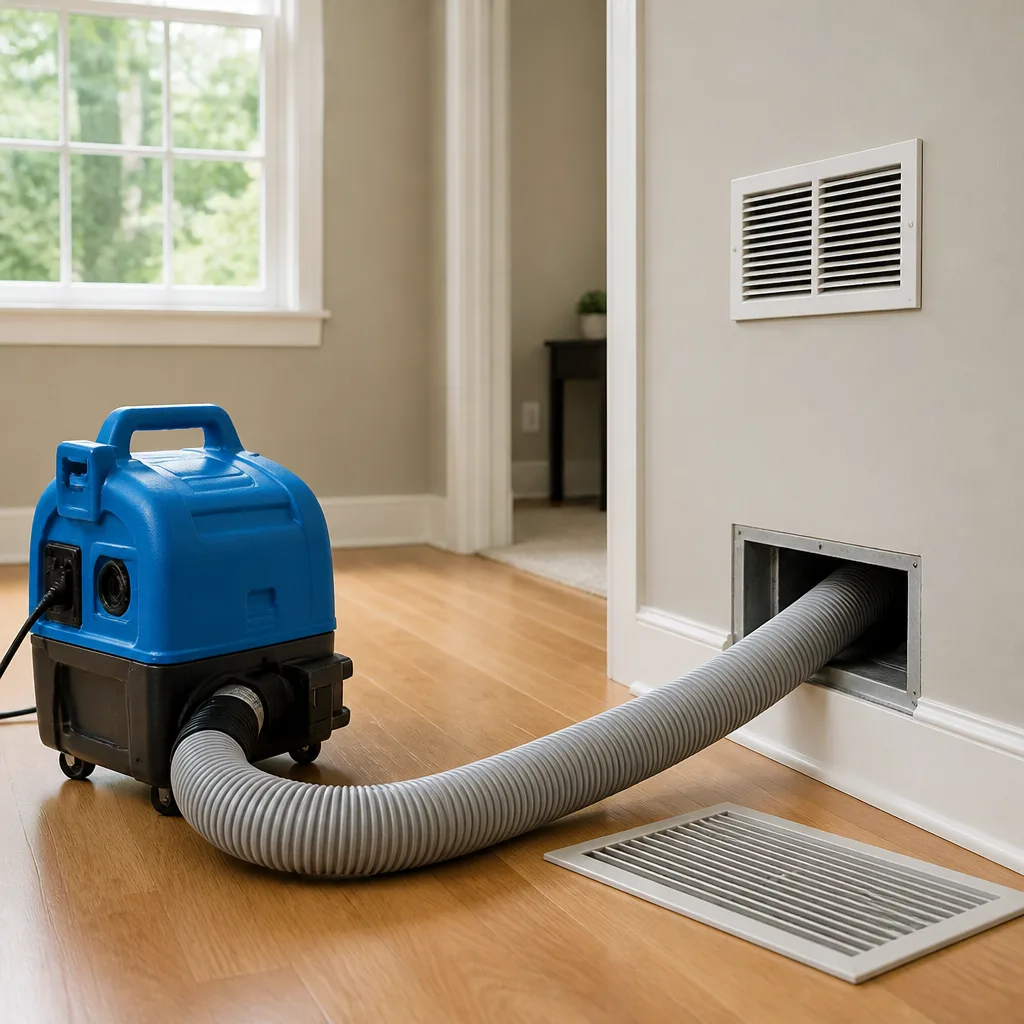 Whole-home duct cleaning
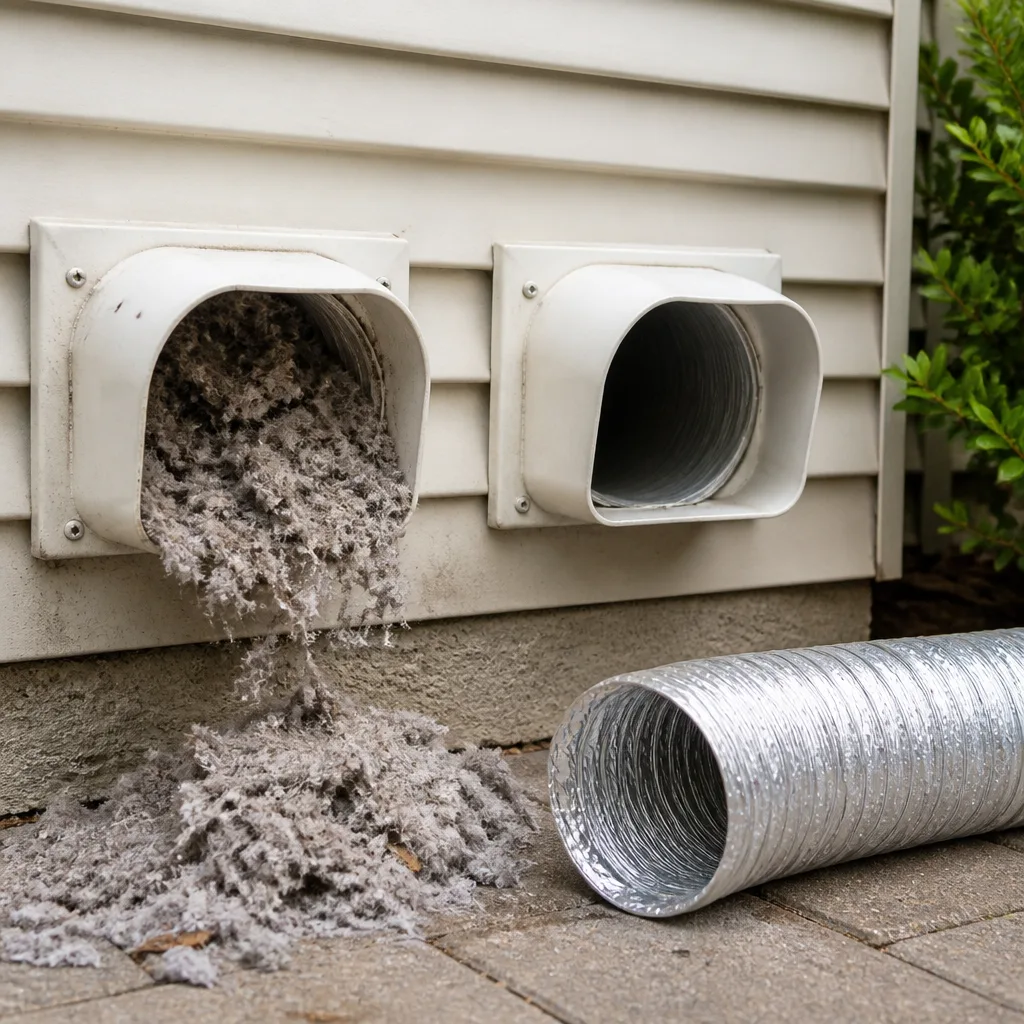 Dryer vent cleaning
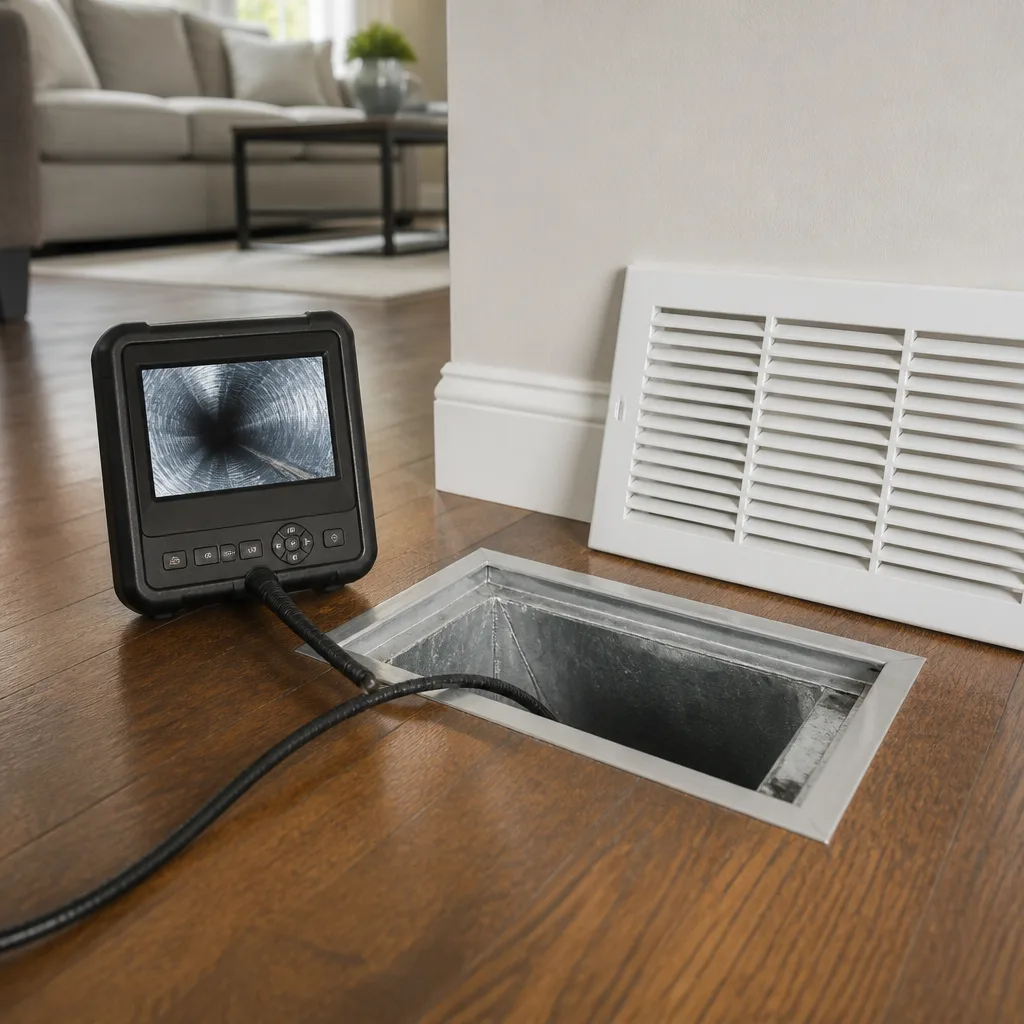 Camera inspection
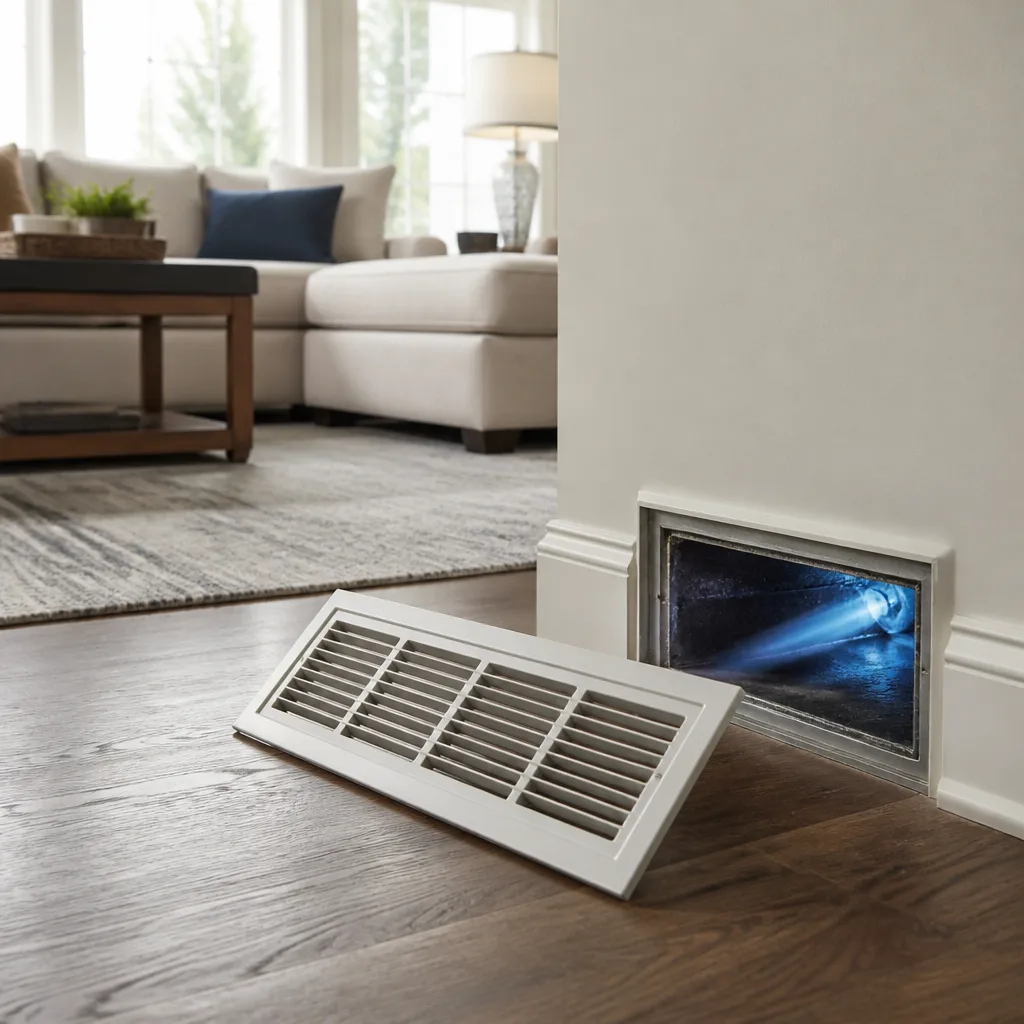 Sanitizing & deodorizing
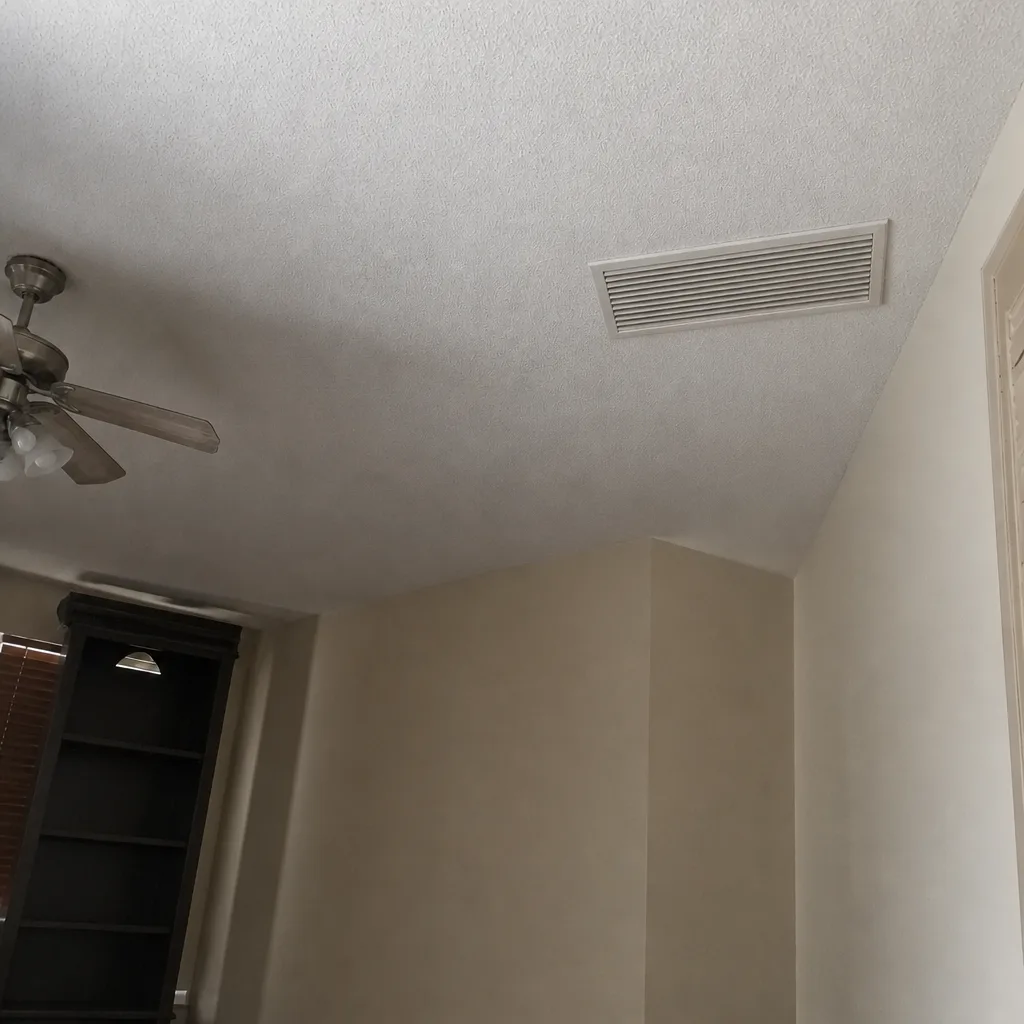
Whole-system duct and dryer vent check with before-and-after photos - you see exactly what came out of your vents
That "$99 whole-house special" is a bait ad - the real number appears once they are in your hallway, or the "clean" is a shop-vac at the register. We photograph the inside of your ducts before and after instead.
Air Duct Cleaning Permits, Codes & Inspections in Miramar, FL: What You Need to Know
No permit is required to clean your ducts in Florida, and that single fact is where a lot of Miramar homeowners stop reading. The problem is what gets bundled into the same visit. When a contractor replaces a section of duct, seals joints with mastic, or treats microbial growth inside the system, those activities land under different licensing and permitting categories than vacuuming debris out of a metal trunk line. We’ve walked into homes where the cleaning was fine and the work done alongside it was never permitted, and the homeowner didn’t find out until a sale or an insurance review. This guide explains where that line sits, how to verify who you’re hiring, and what Miramar’s housing stock and HOA landscape add on top.
Quick Answer
Routine air duct cleaning does not require a permit in Florida or in Miramar. Duct modification, section replacement, and duct sealing that alters the mechanical system generally do require a mechanical permit pulled through Broward County or the City of Miramar, and the contractor must hold the right state license for that scope. Mold remediation inside ductwork falls under a separate Florida statute with its own contractor credential. Cleaning-only work needs neither a permit nor a mold remediation license, but the technician still needs to know where the boundary is.
Styles & brands we work with
- Whole-home duct cleaning
- Dryer vent cleaning
- Camera inspection
- Sanitizing & deodorizing
Table of Contents
- Does air duct cleaning need a permit in Miramar?
- Florida licensing categories: cleaning versus modification
- How to verify a contractor’s license before you book
- When duct sealing crosses into a mechanical permit
- Mold remediation in ducts and Florida Statute 468.84
- What Miramar HOA rules add to the picture
- If an inspector finds unpermitted duct work from a previous owner
- What a duct inspection actually covers
Does air duct cleaning need a permit in Miramar?
No. Air duct cleaning is a maintenance service, not construction, and it does not trigger a building permit in Miramar or anywhere else in Broward County. You won’t find a permit category for it, and no inspector is going to review a vacuuming job. That’s true whether the system serves a single-family house in Silver Lakes or a light commercial suite along the Miramar Parkway corridor.
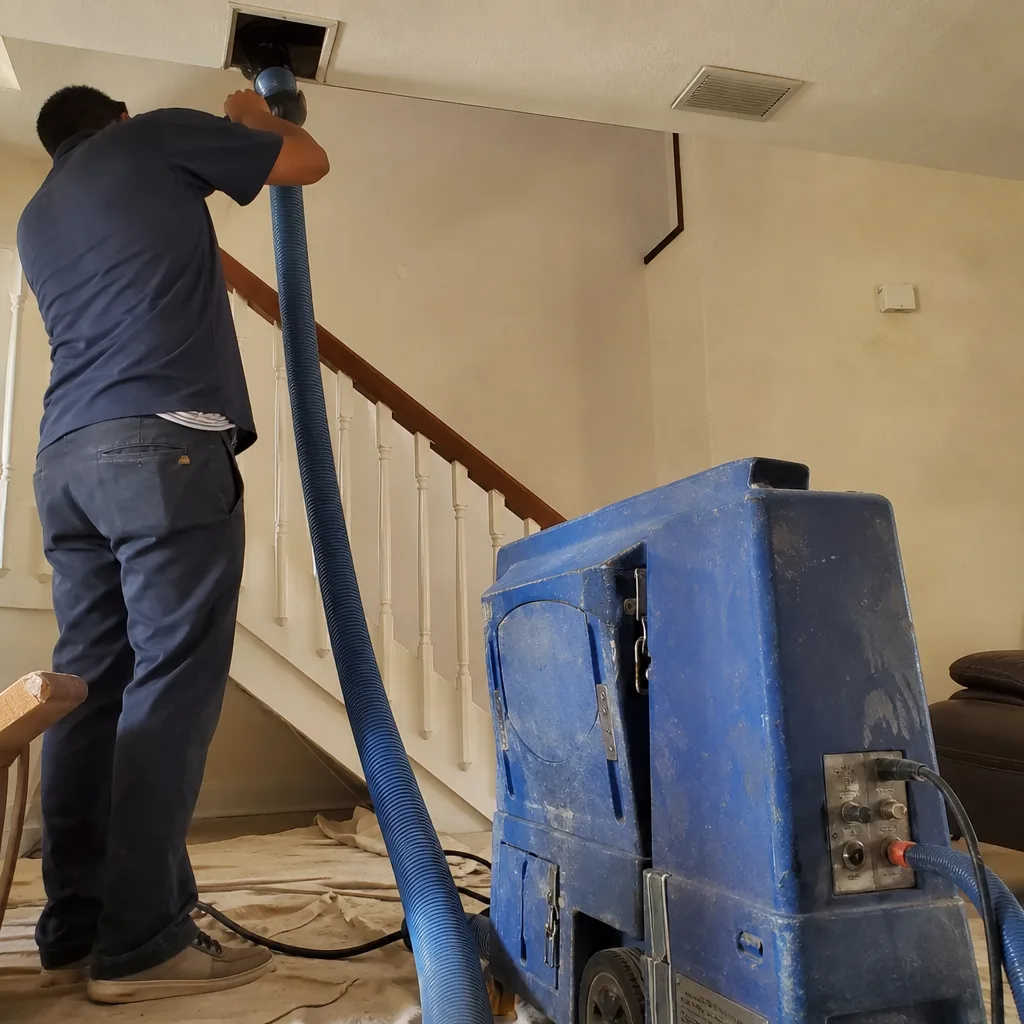
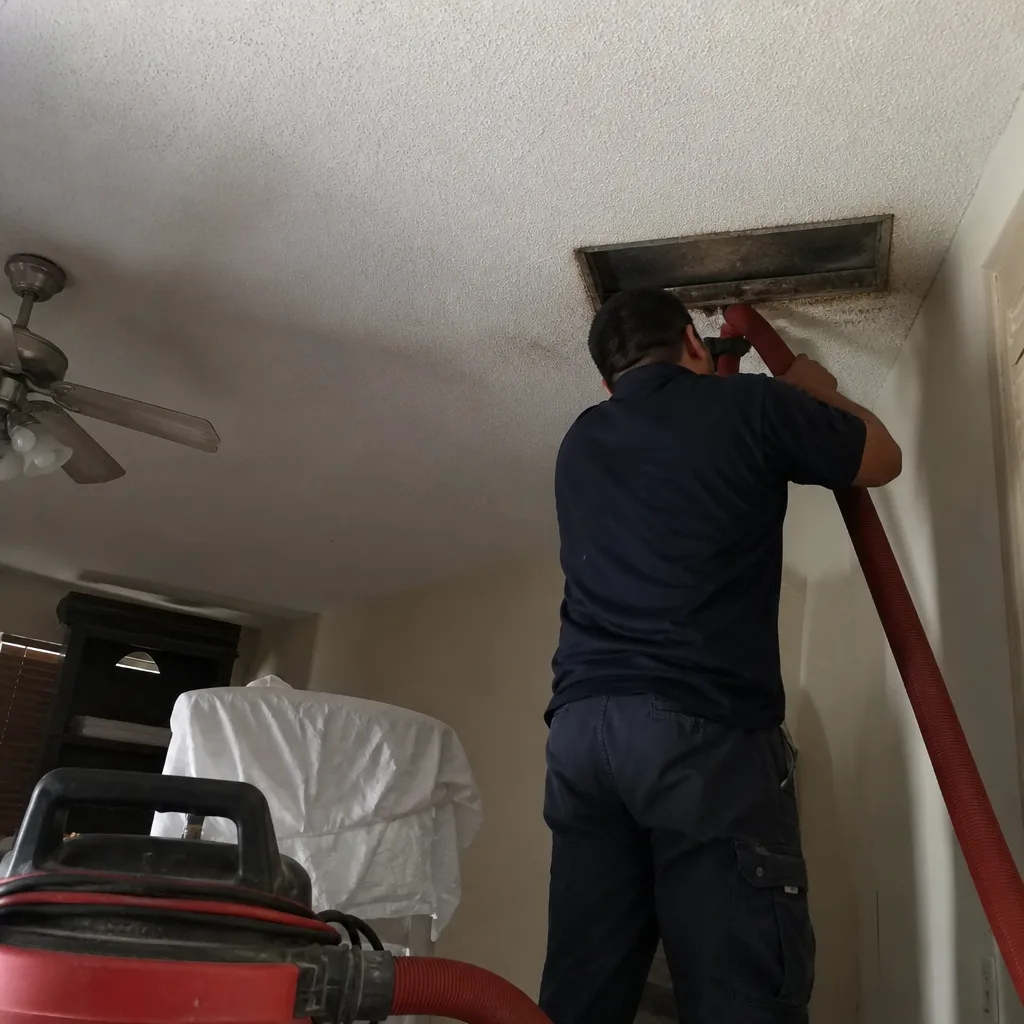
What air duct cleaning involves is accessing the duct system, agitating the interior surfaces, and extracting the loosened debris under negative pressure so it leaves the building rather than settling into the living space. Our technicians use Rotobrush rotary contact cleaning tools to physically work the duct walls, paired with Nikro negative-air equipment rated to capture what the brushes free up. Nothing about that sequence changes the structure of the system. No permit.
The confusion usually comes from three adjacent activities that sound like part of a cleaning job but aren’t:
- Duct repair and section replacement. Cutting out a crushed or disconnected run and installing new duct is mechanical work. It’s permitted, and it requires the right license class.
- Duct sealing with mastic or aerosol sealant. Sealing changes the system’s air distribution characteristics. Depending on scope, it can require a mechanical permit.
- Mold remediation inside the air pathway. Regulated separately at the state level, with its own credential requirement, regardless of whether it happens during a cleaning visit.
Knowing which of those three, if any, applies to your situation is the whole game. A cleaning-only job on a sound system is straightforward. The moment someone proposes to alter the ducts, you’re in a different regulatory world, and the paperwork matters. Ask any contractor which category your job falls into before they start, and get the answer in writing on the estimate.
Florida licensing categories: cleaning versus modification
Florida doesn’t issue a “duct cleaning license.” It regulates the work by what you’re doing to the building, not by the trade name on the truck. That’s the distinction most homeowners miss, and it’s the one that determines whether your contractor is actually allowed to do what they’ve proposed.
Cleaning-only work
Cleaning the interior of ductwork is a maintenance activity. There’s no state license class dedicated to it, and no permit. What you should look for instead is evidence of method: professional-grade equipment, containment during the job, and before-and-after documentation. When a crew shows up with a shop vacuum and a spinning brush on a drill, the credential question is moot because the work isn’t going to accomplish much. We work on the whole air pathway with equipment that matches the job, including Abatement Technologies containment and HEPA filtration gear borrowed from remediation practice, because a cleaning visit that stirs debris into the air isn’t a cleaning visit.
Duct modification and repair
Replacing duct sections, rerouting a run, adding or removing a register, or resealing a system in a way that changes its performance falls under Florida’s mechanical contracting licensing framework. That’s a state-issued certified or registered contractor license held by the business and tied to a qualifying individual. If a contractor is proposing to cut into your ductwork, they need to hold that credential. Full stop.
Why the two get confused
Many residential duct cleaning companies, ours included, also perform air duct repair. That’s a natural pairing. But the pairing means a homeowner can be talking to a crew about cleaning and end up approving repair work without ever asking about the license behind it. When we find a disconnected duct or a crushed flex run during a clean, we diagnose it and we can fix it, and we’ll tell you plainly what the repair involves and which permit path applies. You should never have to guess.
How the license classes differ in practice
Florida’s certified contractors can work statewide. Registered contractors are limited to the jurisdiction where they registered. For a Miramar homeowner, that distinction rarely bites because a legitimate Broward County contractor will be registered where they work. But it’s a useful check: ask a contractor where they’re registered and confirm it covers Miramar. If the answer is vague, that’s information.
How to verify a contractor’s license before you book
Verification takes about five minutes and it’s the single most useful thing you can do before signing an estimate. Florida makes the records public, so there’s no reason to take anyone’s word for it.
- Get the license number in writing. Ask for it on the estimate or the written quote. A contractor who can’t produce a number quickly is telling you something.
- Look it up in the state database. The Florida Department of Business and Professional Regulation maintains a public license search. Search the business name and the individual license number. Confirm the license class matches the work proposed.
- Check the status, not just the existence. A license that’s expired, revoked, or suspended still shows up in the database. Read the status field carefully.
- Confirm the business entity matches. The name on the license should match the name on your estimate. Variations are a common way to work around a lapse.
- Ask which permit the job will pull, if any. If duct modification or sealing is on the scope, the contractor should be able to tell you which jurisdiction issues the permit and who pulls it. A confident answer here is a good sign.
- Request certificate of insurance documentation. Insurance and bonding are baseline expectations for anyone working inside your home. Ask, don’t assume.
For a cleaning-only job, steps one through four are less urgent because the licensing framework doesn’t directly apply. But you’re still hiring a company that will be inside your home and inside your air system. The verification habit is worth building either way, and it costs nothing. The Miramar building department can confirm whether a specific scope requires a permit if you want a second opinion before committing.
Red flags worth walking away from
- A verbal-only estimate with no license number and no written scope
- Pressure to approve repair work the same day, before you’ve had a chance to verify credentials
- A price that seems to be per vent rather than for the whole system
- Reluctance to put the specific work scope in writing
When duct sealing crosses into a mechanical permit
Duct sealing is where the permit question gets genuinely technical, and where most of the confusion in Miramar homes originates. Sealing isn’t one thing. It’s a spectrum, and the permit threshold sits somewhere along it.
At one end, sealing a small gap with mastic during a cleaning visit is a minor repair. At the other end, a full duct system pressure test followed by targeted sealing of every measured leak point is a mechanical system alteration that can require a permit through the local building authority. The variable is scope and whether the work changes the system’s performance characteristics in a way that needs inspection.
Where the line typically falls
- Cleaning and minor sealant touch-up: generally no permit. The work restores the system toward its original condition.
- Replacing disconnected or crushed duct sections: permits are typically required. This is a structural change to the mechanical system.
- Full system resealing with aerosolized or sprayed sealant: depends on scope and jurisdiction. In Broward County, the safe assumption is that a permit is required. Ask the contractor to confirm with the building department.
- Adding, removing, or relocating registers and runs: permits required. The system’s layout is changing.
We’d rather tell you a permit is needed and have you weigh it than skip the conversation. When a cleaning visit reveals a system that needs real sealing work, the honest path is to explain what’s involved, what the permit process looks like, and let you decide. Florida’s climate makes this more than a paperwork issue. In a hot, humid climate, duct leakage does more than waste energy. It pulls humid outdoor air into the system, and that conditioned duct surfaces become the cool surface where moisture condenses. A sealed system isn’t a luxury down here. But the sealing still needs to be done correctly, and frequently that means permitted work.
Mold remediation in ducts and Florida Statute 468.84
Florida Statute 468.84 governs mold remediation in the state, and it applies to ductwork just like it applies to walls and attics. If microbial growth inside the air handling system needs to be remediated rather than simply cleaned, the contractor doing that work needs the credential the statute requires. Cleaning a dusty duct is one thing. Treating a mold-contaminated air pathway is a regulated activity with defined protocols, containment requirements, and post-remediation verification.
This is where homeowners get blindsided. A cleaning company opens the system, sees dark growth on the interior of a flex run or the air handler cabinet, and offers to “take care of it” as part of the visit. If that company doesn’t hold the remediation credential, they’re operating outside their scope. If they do the work anyway, the homeowner is left with unpermitted, unverified remediation and no documentation to show a future buyer, an insurer, or an inspector.
What the statute requires in practice
- A licensed mold remediation contractor. The work falls under a specific license class, not a general contractor’s umbrella.
- A written remediation plan and protocol. Containment, negative pressure, HEPA filtration, and a defined scope.
- Post-remediation verification. An independent assessment confirming the work actually addressed the problem, not just the visible surface.
- Documentation you keep. This is the part that matters years later at resale or during an insurance review.
Our work sits on the cleaning side of this line. We clean the ducts, we use containment and HEPA filtration because that’s the standard we hold ourselves to, and we’re straightforward about the fact that remediation is a separate regulated specialty. If a job calls for remediation, that’s a conversation about credentials and protocol, not a line item added to a cleaning invoice. In a Miramar home with an air handler in a hot garage or a duct system that runs through unconditioned attic space, moisture issues are common enough that the question comes up. Honest answers keep everyone out of trouble.
What Miramar HOA rules add to the picture
City and county requirements are the floor, not the ceiling. Many Miramar communities, including the larger master-planned neighborhoods, layer HOA architectural review on top of municipal codes. For HVAC-adjacent work, that review can reach further than homeowners expect.
Where HOA rules typically apply
- Exterior equipment changes. Replacing or relocating a condenser unit or air handler may need architectural review approval before installation. Placement, screening, and noise considerations matter to some associations.
- Ductwork visible from outside. In some zero-lot-line and townhome configurations, duct runs are visible in soffits or exterior chases. Any change there may trigger review.
- Roof or attic penetrations. If duct repair requires new penetrations or envelope changes, the association may want to review the scope.
- Contractor requirements. Some HOAs require proof of insurance and licensing before a contractor is allowed on the property. Get those documents before the scheduled date, because a crew turned away at the gate is a wasted appointment.
- Work hours and staging. Many associations restrict when contractors can work on the property. That’s the association’s rule, not ours; we schedule to the window the association allows, not the other way around.
Cleaning-only work rarely triggers HOA review, because it doesn’t change anything visible or structural. But if a job expands into repair or sealing, check the association’s architectural guidelines before work starts. It’s a phone call or a portal submission, and it saves the headache of doing permitted work that the HOA later objects to. When you book dryer vent cleaning or duct service, mention any HOA requirements up front and we’ll work within them.
If an inspector finds unpermitted duct work from a previous owner
This happens more than people realize, usually during a home sale. An inspector crawls into the attic, finds duct runs that don’t match the permit history, and the transaction stalls. The work was done by a prior owner, possibly years ago, and the current homeowner is the one holding the problem.
The good news is that unpermitted work is generally solvable. The path depends on what was done and how it was done.
Steps to resolve prior unpermitted duct work
- Get a clear diagnosis of what was altered. A technician who works on duct systems daily can identify replaced runs, nonstandard connections, and modifications that don’t match factory installation. Documentation is the goal here.
- Contact the building department. The City of Miramar or Broward County, depending on jurisdiction, can tell you what the permit history actually shows and what they’d need to close a gap. Sometimes a permit was pulled and the records are simply incomplete.
- Ask about a permit for the work as it stands. Many jurisdictions allow a contractor to permit existing work after inspection, which is called pulling a permit for work already completed. It’s not the preferred route, but it’s legitimate and it resolves the record.
- Correct deficient work. If the alteration creates a genuine safety or performance problem, it gets fixed regardless of the paperwork. Ductwork that’s disconnected, crushed, or leaking is a real issue independent of the permit history.
- Keep documentation. Once the work is permitted or corrected, keep the inspection record with your home paperwork. It’s the difference between a smooth sale and a delay.
We handle air duct repair as a named specialty for exactly this reason. When we find a problem, we can diagnose and fix it rather than leaving you to source a second contractor. We clean it, and if it’s broken, we fix it.
What a duct inspection actually covers
A duct inspection is not the same as a permit inspection. The permit inspection is a government reviewer confirming that construction work matches code. A duct inspection is a technician examining the condition and performance of your air pathway. Homeowners often assume these are the same process, and they’re not.
What a technician examines during a duct inspection
- Duct integrity. Disconnected flex runs, crushed sections, gaps at joints, and improperly sealed register boots.
- Contamination. Debris load, microbial growth, and signs of pest activity.
- Moisture. Condensation on duct surfaces, particularly in unconditioned attic spaces and garages.
- Air handler condition. The component that moves air matters as much as the ducts that carry it. A dirty coil or failing blower undermines everything downstream.
- Filtration. The filter is the system’s first line of defense. We work with Honeywell and Aprilaire filtration systems, and often the most effective improvement to a home’s indoor air is a filter upgrade rather than a duct cleaning.
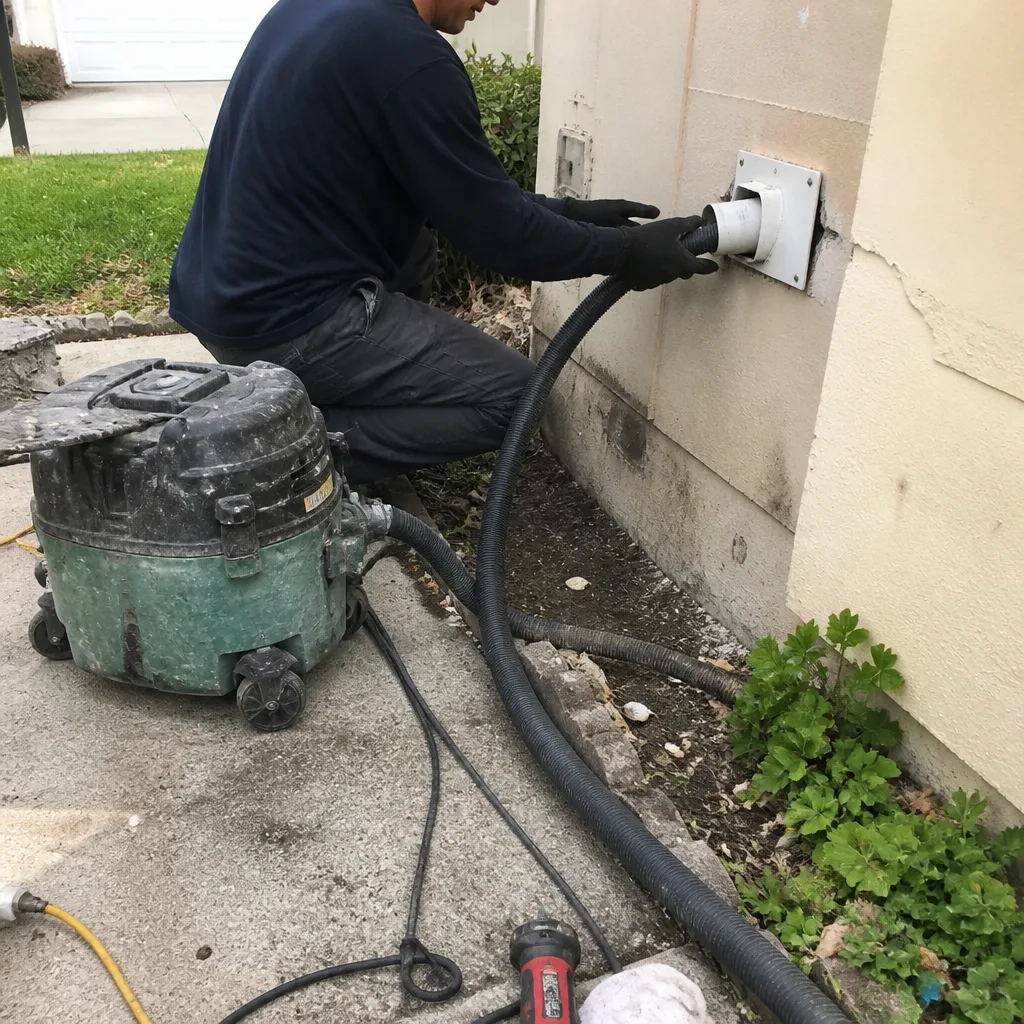
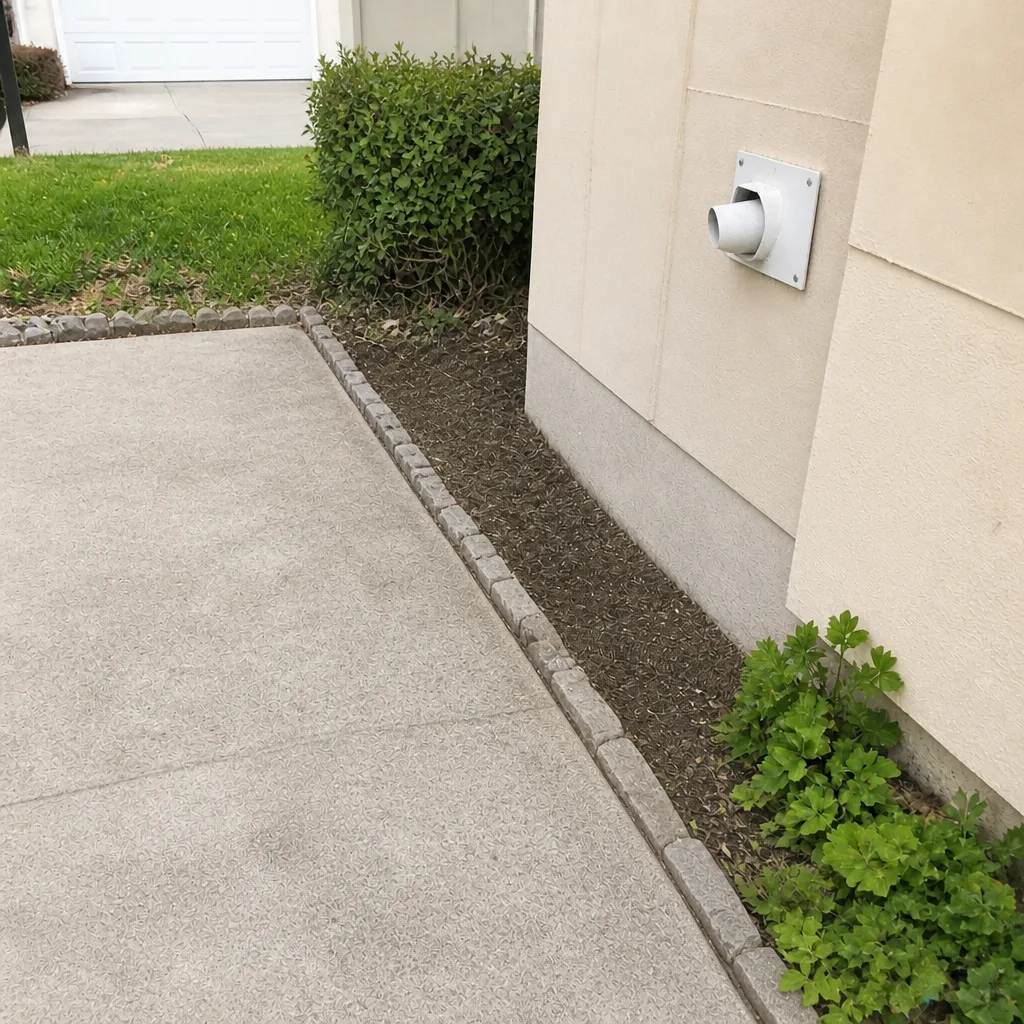
- Dryer vent condition, where applicable. Your dryer vent is a fire-safety item, not a housekeeping item. We inspect it with the same professional tooling we use for duct work because lint accumulation is a leading cause of residential house fires.
What a technician should NOT do is claim to have found something that isn’t documented. Before-and-after photos of your own system are the baseline expectation, and we provide them. If a contractor tells you the ducts are heavily contaminated but can’t show you the before image, the claim is unverifiable.
What the inspection report should tell you
A useful inspection tells you what’s there, what it means, and what the options are. It should distinguish between cleaning needs, repair needs, and anything that requires a licensed specialty beyond our scope. It should flag if a permit would be required for proposed work. And it should be in writing, because verbal findings don’t help you later. Estimates in Miramar from Duct Cleaning Miramar are free and come with the findings in writing.
Common Mistakes to Avoid
- Assuming cleaning and modification are the same thing. They aren’t, and they don’t have the same permit or license requirements. Ask which category your job falls into before you approve any work, and get the answer in writing.
- Not verifying the license class. A contractor can be legitimate and still lack the specific license for duct modification or mold remediation. Check the state database by license number before you sign the estimate, not after.
- Accepting a mold remediation add-on from a cleaning company without checking credentials. Florida Statute 468.84 regulates the work specifically. If the contractor doesn’t hold the credential, the remediation is unpermitted and undocumented.
- Ignoring HOA architectural review. In Miramar communities with architectural guidelines, exterior equipment changes and envelope alterations may require approval before work starts. A crew turned away at the gate is a wasted day for everyone.
- Skipping the permit on duct repair because it feels like a small job. A permit is cheap. Unpermitted work that surfaces during a home sale or an insurance review is not. Small jobs still need to be done correctly.
- Ignoring prior-owner unpermitted work. If you’re buying a home and the inspection flags duct modifications, resolve it before closing. It’s much harder to fix from the other side.
- Believing the per-vent teaser price. A low per-vent quote that expands once the technician is on site is the industry’s classic bait-and-switch. Whole-system pricing agreed in writing before work is the answer.
See the difference
 Before
 After
 Before
 After
 Before
 After
When to Call a Professional
Some duct situations call for professional attention regardless of what the permit rules say. If your HVAC system is moving air poorly, if the air handler is running constantly without keeping up, or if you can see condensation on duct surfaces in the attic, the diagnosis comes first. If you’ve noticed visible growth on the inside of a register boot or a musty smell that intensifies when the system starts, the system needs inspection before anyone cleans it. If a home inspection flagged duct modifications, if you’re selling and want documentation, or if your dryer is taking two cycles to dry a load, those are all reasons to book a professional look.
Duct Cleaning Miramar offers free estimates in Miramar. Call (877) 583-7369. We answer 24/7. Fast dispatch from 7am to 7pm, Sunday through Friday. Our technicians have up to 13 years of experience and work with professional equipment including Rotobrush and Nikro. Every estimate is written, itemized, and free.
Frequently Asked Questions
No. Routine air duct cleaning does not require a permit in Miramar or anywhere in Broward County. Cleaning is maintenance work, not construction. A permit is only required if the scope expands into duct modification, section replacement, or other mechanical work that alters the system. Call (877) 583-7369 for an exact quote, and we’ll tell you if your specific scope needs one. Estimates are free.
Duct cleaning removes accumulated debris from inside the ducts. Duct sealing closes leaks in the system, and it’s the activity that typically triggers a permit depending on scope. Minor mastic touch-up during a cleaning visit usually doesn’t require a permit. Full system resealing, section replacement, or adding and removing runs generally does. Confirm which category your proposed work falls into before approving anything. Call (877) 583-7369 for an exact quote, and estimates are free.
Cleaning-only work doesn’t have a dedicated state license class, so there’s nothing specific to verify for cleaning alone. Duct modification, section replacement, and mechanical alterations fall under Florida’s mechanical contractor licensing framework, and the contractor must hold that credential. Mold remediation inside ducts requires a separate credential under Florida Statute 468.84. Verify any license number through the state database before booking permitted work. Call (877) 583-7369 for an exact quote, and estimates are free.
If what’s inside the ducts is mold requiring remediation rather than ordinary debris, Florida Statute 468.84 requires the work to be handled by a licensed mold remediation contractor. A company without that credential can’t legally do it. Your cleaning company should be able to identify the situation, tell you plainly, and point you to the right specialty. Call (877) 583-7369 for an exact quote, and estimates are free.
Duct cleaning in Miramar is priced per system, not per vent, and the range depends on the system’s size, configuration, and condition. Cheap teaser quotes often work out to a puffed-up invoice once a technician is on site, with per-vent charges added after. Our approach is one flat price per system agreed in writing before work starts, with before-and-after photos of your own ducts so you can see what was done. Call (877) 583-7369 for an exact quote, and estimates are free.
Cleaning-only work rarely triggers HOA review because nothing visible or structural changes. Repair work that affects exterior equipment, visible duct runs, or envelope penetrations can fall under architectural review in Miramar communities with those guidelines. Check the association’s rules before the work is scheduled, and tell your contractor when you book. Call (877) 583-7369 for an exact quote, and estimates are free.
The Bottom Line
Routine duct cleaning in Miramar is permit-free and stays that way as long as the scope doesn’t expand. The moment duct repair, section replacement, sealing, or mold remediation enters the conversation, the licensing and permit landscape changes completely. Verify the contractor’s license class before approving that work, check with the city or county building department on scope, and check your HOA’s rules if you live in a community with architectural guidelines. Save your documentation, because it’s what stands between unpermitted work from a prior owner and a smooth home sale years later. And when you do book cleaning, expect whole-system pricing, before-and-after photos, and a method that captures dust rather than redistributing it. Learn more about our duct cleaning Miramar services or call (877) 583-7369 for a free estimate. We answer 24/7, and fast dispatch is available from 7am to 7pm, Sunday through Friday.
Written by the team at Duct Cleaning Miramar.