
Last updated November 15, 2026
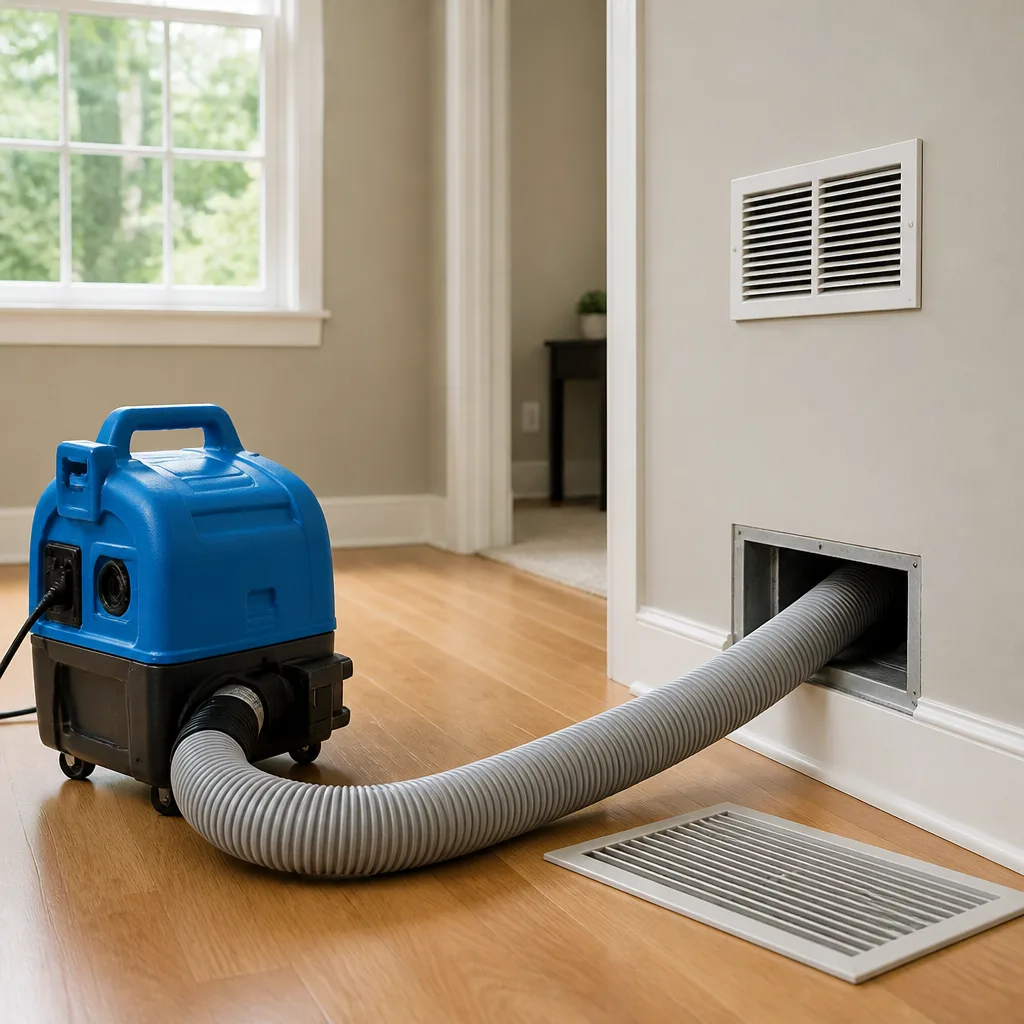 Whole-home duct cleaning
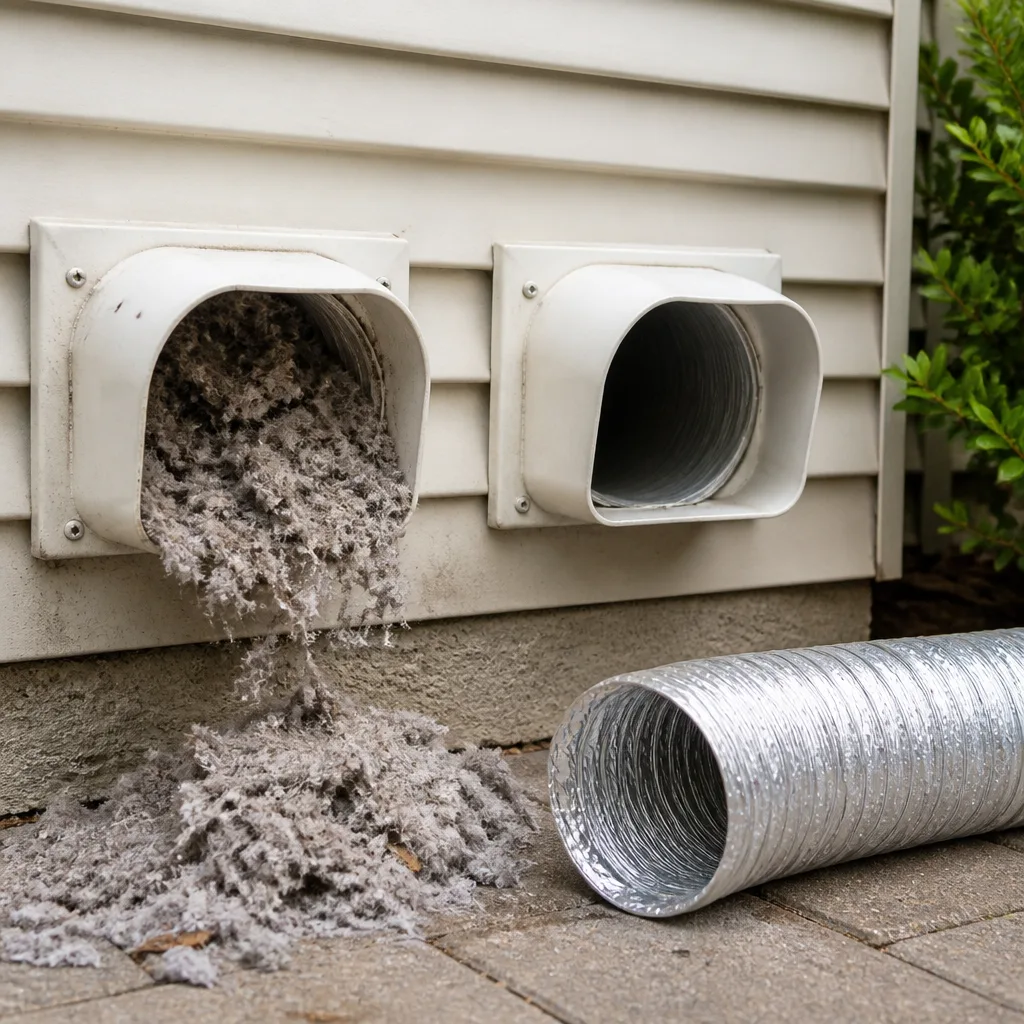 Dryer vent cleaning
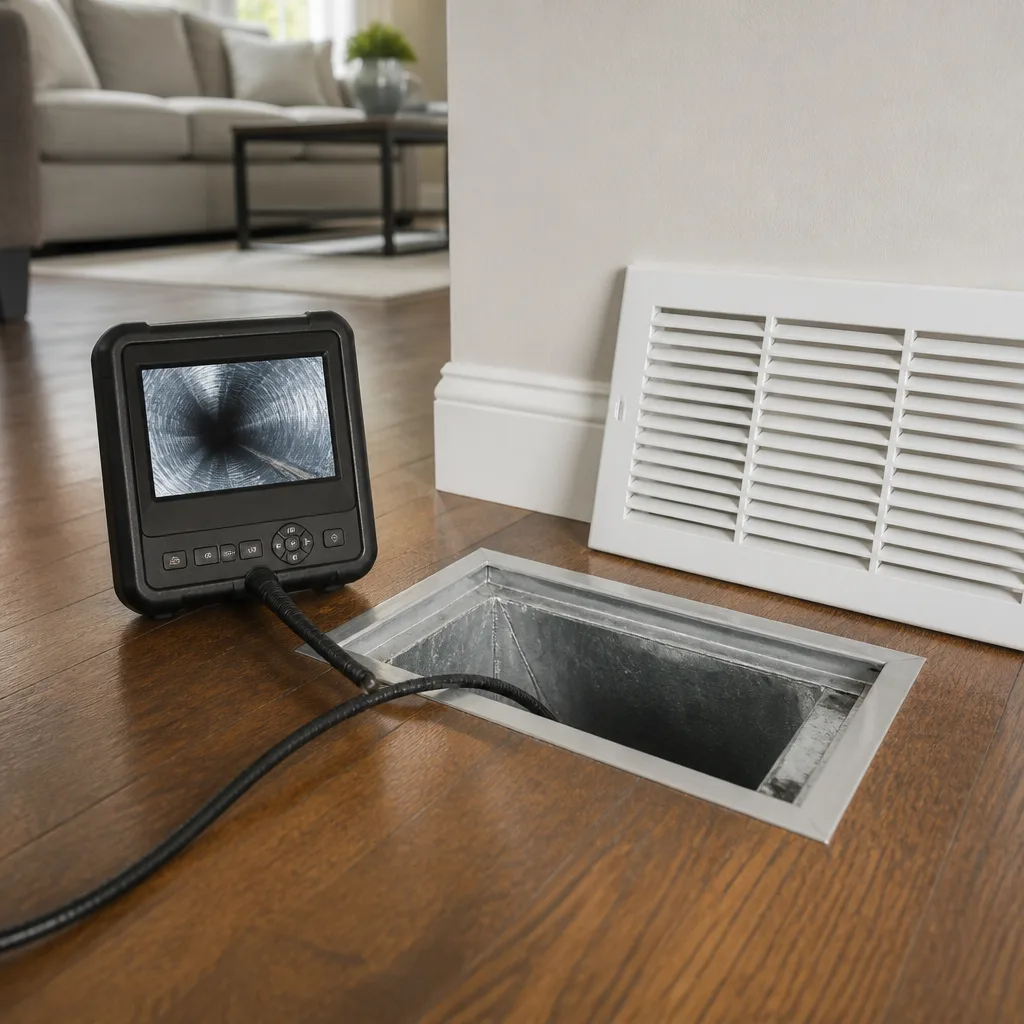 Camera inspection
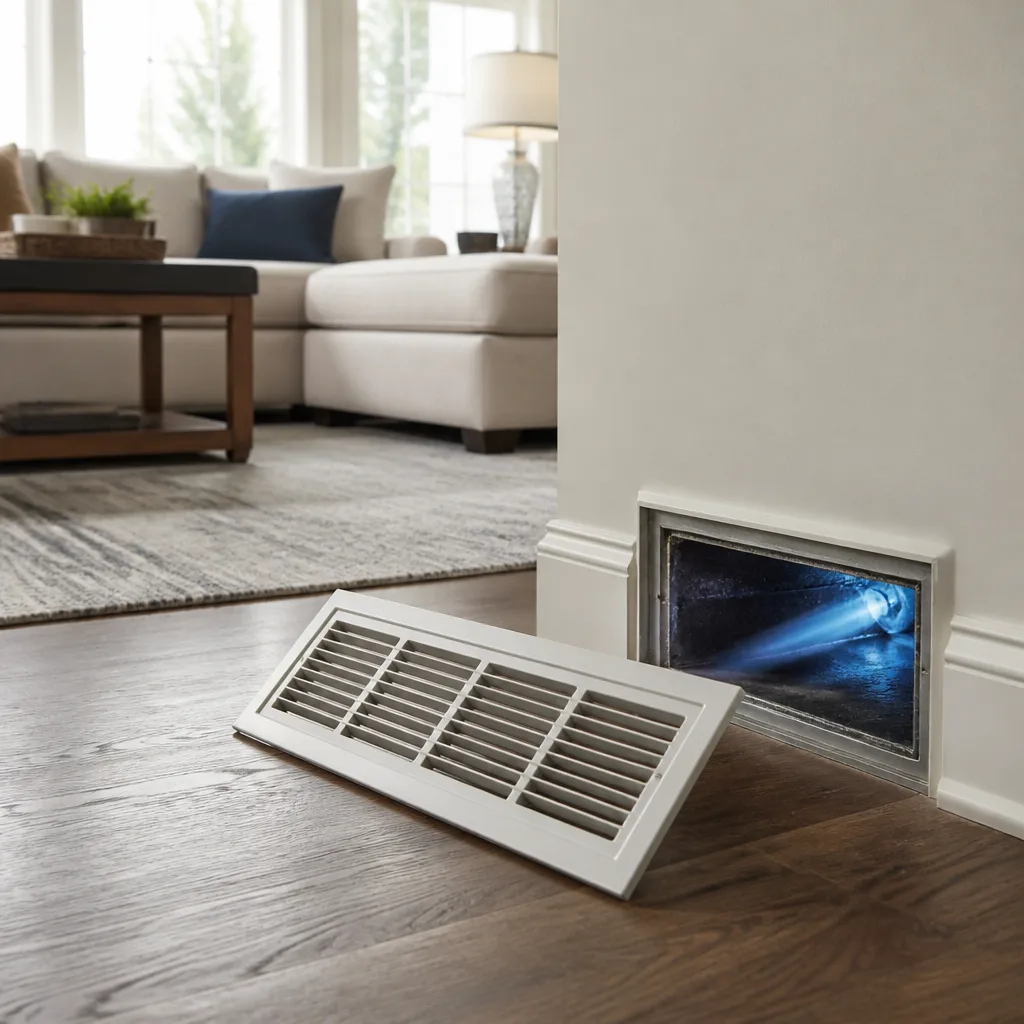 Sanitizing & deodorizing
Whole-system duct and dryer vent check with before-and-after photos - you see exactly what came out of your vents
That "$99 whole-house special" is a bait ad - the real number appears once they are in your hallway, or the "clean" is a shop-vac at the register. We photograph the inside of your ducts before and after instead.
Air Duct Cleaning Emergency Preparedness Guide for Miramar Homes
Most Miramar homeowners worry about the roof when a storm is coming. Few think about the ducts, which is strange, because a duct system is the one part of the house that can pull floodwater, wind-driven rain, and loose insulation straight into the rooms where you sleep. After a major storm, some of the worst indoor air problems we’re called out to don’t trace back to wet drywall at all. They trace back to unsealed return grilles and open duct penetrations that let debris and moisture into the air pathway, then a homeowner who switched the AC back on before anyone checked it. This guide walks you through the before, during, and after of protecting that system, with the specific steps that matter in Miramar’s flat-roof, storm-prone neighborhoods.
Quick Answer
To prepare your ducts for a hurricane or major storm in Miramar, seal return grilles and any exposed duct penetrations before the event, keep the HVAC off during and after the storm until you’ve checked for moisture, and document the condition of your system with photos before you clean it for insurance purposes. If water or debris got into the ducts, don’t run the system – have a professional inspect and clean it first, because a contaminated system spreads mold through every room it serves. For pre-storm or post-storm duct work in Miramar, call (877) 583-7369 for a free estimate.
Styles & brands we work with
- Whole-home duct cleaning
- Dryer vent cleaning
- Camera inspection
- Sanitizing & deodorizing
Table of Contents
- Why Ducts Are the Hidden Vulnerability in a Miramar Storm
- Pre-Storm Preparation: Sealing Your Air Pathway
- Post-Storm Assessment: What to Check Before You Run the AC
- How to Tell If Moisture Reached the Air Handler or Duct Interior
- Flat-Roof Construction and Its Direct Duct Contamination Pathway
- Documenting Duct Contamination for Your Insurance Claim
- What Professional Post-Storm Duct Cleaning Involves
- Your Dryer Vent Is a Storm-Safety Item, Too
- Common Mistakes to Avoid
- When to Call a Professional
- Frequently Asked Questions
Why Ducts Are the Hidden Vulnerability in a Miramar Storm
A duct system is a set of openings into your house. Every supply register and every return grille connects to a network of sheet metal or flex duct that eventually reaches the air handler. In normal weather, that network moves conditioned air. In a storm, it becomes a potential entry point for wind-driven rain, roof debris, and airborne contamination. Miramar sits in one of the most hurricane-active corridors in the country, and that changes how a homeowner should think about the air pathway during storm season.
The damage usually isn’t obvious. A duct line running through a hot attic, a chase, or a soffit can take on water without a single drip visible in the living room. Debris blown into a return grille may sit quietly in the duct until the blower pushes it out through every vent in the house. That’s why the preparation and assessment steps below matter more than the cleanup itself. Catching intrusion early keeps the problem small and contained. Missing it lets moisture sit in a dark, insulated space where mold has exactly the conditions it needs.
This is also why duct work and storm remediation overlap more than most people expect. What enters the system doesn’t stay in the system. It reaches the bedrooms, the kitchen, and the rooms where children and older adults spend the most time. If you’re preparing a Miramar home for storm season, the ducts belong on the checklist right next to the shutters and the water supply.
Pre-Storm Preparation: Sealing Your Air Pathway
When a hurricane or tropical system is forecast for Miramar, you have a window of a day or two to reduce what can get into the duct system. These are temporary measures, not a permanent fix, and they take an hour at most with basic materials from any hardware store.
- Turn the HVAC system off at the thermostat and the breaker before you start. You don’t want the blower pulling air while you seal openings.
- Cover return grilles with plastic sheeting and tape. Returns are the largest openings in the system and the most common path for wind-driven debris. Seal the edges fully so the plastic doesn’t flap loose in a gust.
- Tape over supply registers in rooms exposed to the weather – especially any room with a window or door that could fail. A small amount of tape goes a long way toward keeping rain out of the duct run.
- Inspect the attic for exposed duct penetrations where the duct passes through the ceiling or roof deck. If you can safely reach them, tape those joints. If you can’t reach them safely, note it and check them after the storm.
- Photograph the interior of each return grille and register before the storm. This gives you a clean “before” record that will matter if you file a claim later.
If your home has a Honeywell or Aprilaire filtration setup, pull the filter and set it aside before you seal the return, then reinstall a fresh filter after the storm. A saturated filter sitting inside the cabinet during a storm is one more source of moisture in the air pathway. One note: don’t seal anything permanently. These plastic-and-tape barriers come off as soon as the storm passes and you’ve assessed the system.
Post-Storm Assessment: What to Check Before You Run the AC
This is the step where most homeowners make their one big mistake. After a storm, the instinct is to flip the AC back on and see if everything works. Resist that instinct. Running a system with contaminated or wet ducts spreads mold and debris through every room the system serves. Check first, then cool.
Here’s how to walk through the assessment safely:
- Look for visible water damage first. Check ceilings, walls, and the attic access. Wet drywall near a duct run is a strong signal that the duct behind it took on water too.
- Turn off power to the air handler and outdoor unit at the breaker before opening anything. Never inspect an air handler cabinet with power on.
- Open each return grille and look inside with a flashlight. You’re checking for debris, standing water, damp insulation, or visible dark spotting on the duct interior.
- Check the air handler cabinet and filter slot. A wet filter, rust, water staining on the cabinet interior, or a musty smell all point to moisture intrusion that reached the equipment.
- Smell the air near the registers with the system off. A musty or earthy odor is one of the clearest early indicators that contamination is present inside the ductwork.
- Photograph everything you find. Every return, every register, the air handler interior, and any water staining in the surrounding structure. This documentation is the foundation of an insurance claim and of the cleaning scope later.
If everything is dry and clean, you can restore power and run the system. If you found moisture, debris, or the smell, leave the system off and call for a professional assessment. When you’ve confirmed the system is clean, restore power and let it run. Scheduling routine air duct cleaning after a storm event makes sense even if the system looks dry, because contamination isn’t always visible from the grille side.
How to Tell If Moisture Reached the Air Handler or Duct Interior
Moisture intrusion is the single most consequential post-storm question for your duct system. Wet ducts in a warm, humid climate create exactly the incubator mold needs, and once it’s growing inside the duct lining, running the system distributes spores everywhere. Here’s what to look for, in order of how reliable the signal is.
- Water staining inside the air handler cabinet. Rust rings, dark watermarks, or softened metal are conclusive signs that moisture reached the equipment.
- A damp or saturated filter. If the filter was in place during the storm and it’s wet, moisture was in the cabinet.
- Visible spotting on flexible duct liner. Flex duct has an internal liner that stains visibly when it gets wet. Dark patches or a mottled appearance are a warning sign.
- Soft or disbonded duct insulation. Wet insulation loses its integrity and can separate from the duct wall. Feel it carefully with power off, and don’t disturb it if it seems damp.
- Musty odor at any register. Smell alone isn’t proof, but combined with any of the above, treat it as confirmed contamination.
- Recent roof damage directly above a duct run. If a section of roof failed or a shingle line lifted over a chase or attic duct, assume intrusion until you’ve confirmed dry conditions.
What to do if you find any of these: don’t run the system, don’t try to dry the ducts yourself with a household fan, and get a professional assessment with proper equipment. A cleaning technician can use Abatement Technologies containment and HEPA filtration equipment to isolate the work area, which is the standard in remediation and keeps any biological material from spreading into the rest of the home during cleanup. That’s a meaningful difference from a blow-and-go cleaning with no containment at all.
Flat-Roof Construction and Its Direct Duct Contamination Pathway
Miramar has a lot of flat-roof and low-slope residential construction, which changes how storm damage reaches your duct system. On a pitched roof, water and debris usually drain away from the rooftop mechanical equipment. On a flat roof, they pool. When a rooftop penetration fails, or when a rooftop package unit’s cabinet seal lifts, the water and wind-driven debris have a direct path into the conditioned space below.
The practical result is that a flat-roof home can take on duct contamination even when the interior ceilings show no visible stain. Wind-driven rain enters around a package unit curb or a rooftop duct chase, runs along the top of the ductwork, and reaches the air handler from above. Homeowners tend to check under sinks and around windows after a storm. The rooftop unit curb and the duct chase are the spots that get missed. If your home has a rooftop HVAC unit, walk the perimeter of the curb from inside the attic if you can reach it safely, and look for dark staining or dampness on the underside of the roof deck near the chase.
Post-storm, this is also the reason so many duct cleaning assessments in Miramar involve a visual check of the rooftop equipment as well as the interior ducts. The problem rarely stops at the equipment. The duct pathway is where contamination lands, and that’s where it needs to be cleaned with the right equipment. Sealing roof penetrations and curbs properly is a roofer’s job, and if they’re compromised you want that fixed before any interior duct cleaning is worth doing.
Documenting Duct Contamination for Your Insurance Claim
Duct cleaning as part of storm remediation is often covered by homeowner’s insurance, but only if you can demonstrate that the contamination resulted from the storm rather than from years of neglect. Adjusters work from evidence, and the homeowner who shows up with organized documentation gets a smoother claim than the homeowner who calls after the cleanup is already done. Here’s what adjusters need to see.
- Pre-storm photos. Clean grilles, clean returns, functioning system. Without a “before” image, it’s hard to prove that what’s in the ducts now came from the storm.
- Photos of the intrusion source. Roof damage, window failure, water staining at the wall or ceiling. The source is what establishes the causal link to the ducts.
- Interior photos of every contaminated return and register, taken before cleaning. Include close-ups of visible debris, moisture staining, or mold-like growth.
- The written scope from your duct cleaning provider. A written report that names the contamination found, the extent, the recommended cleaning method, and the equipment used. A one-line invoice isn’t enough.
- Before-and-after photos from the cleaning itself. This is what proves the work was actually done, and it’s standard practice to ask for it. Never accept a cleaning where the contractor can’t show you the inside of your own ducts before and after.
- The cleaning provider’s written estimate, with the scope tied to storm damage. An estimate that reads “routine maintenance” is harder to attach to a claim than one that documents storm-related contamination.
One flat price per system, agreed in writing before work starts, is also easier for an adjuster to process than a per-vent bill that changes once the technician is on site. The final price is set by the written estimate, and that estimate doubles as the claim document. If your insurer wants to send an adjuster out first, that’s fine – photograph and document everything before your cleaning date so the evidence is preserved.
What Professional Post-Storm Duct Cleaning Involves
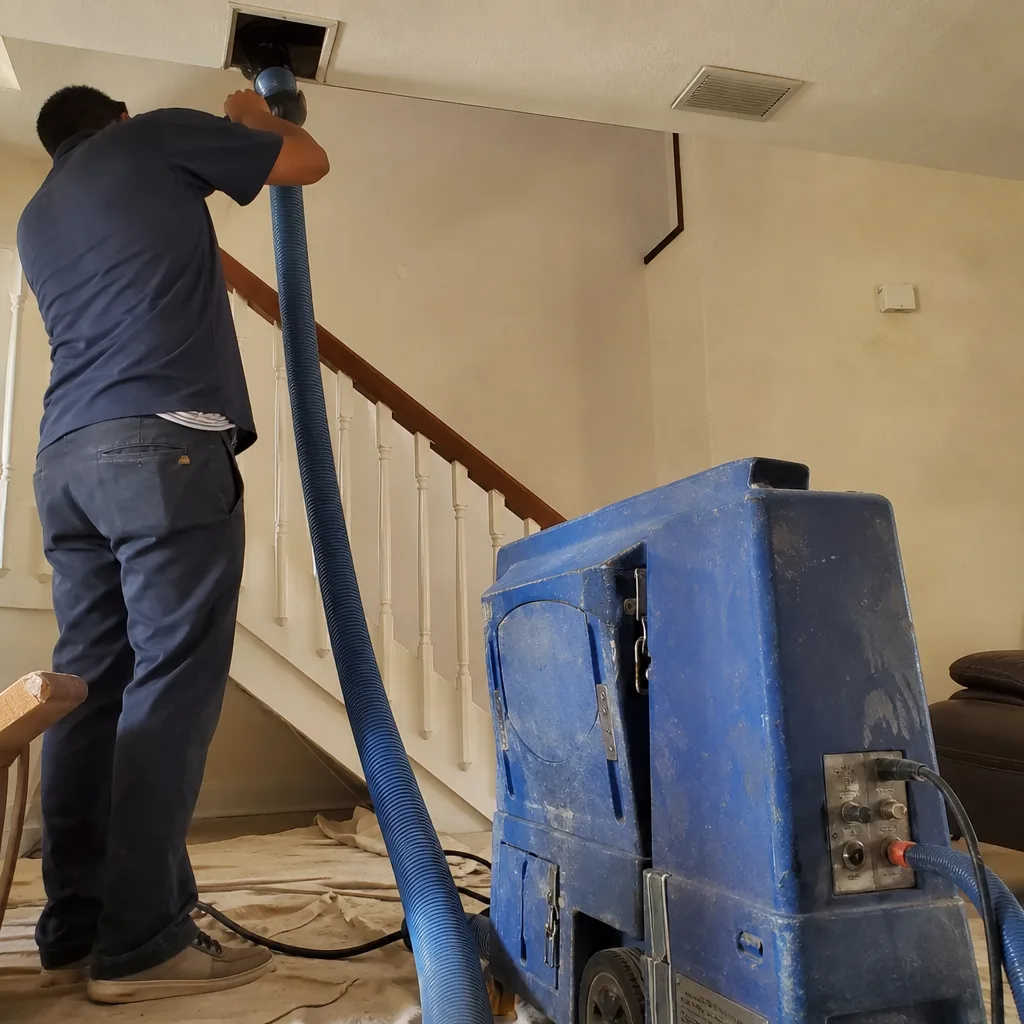
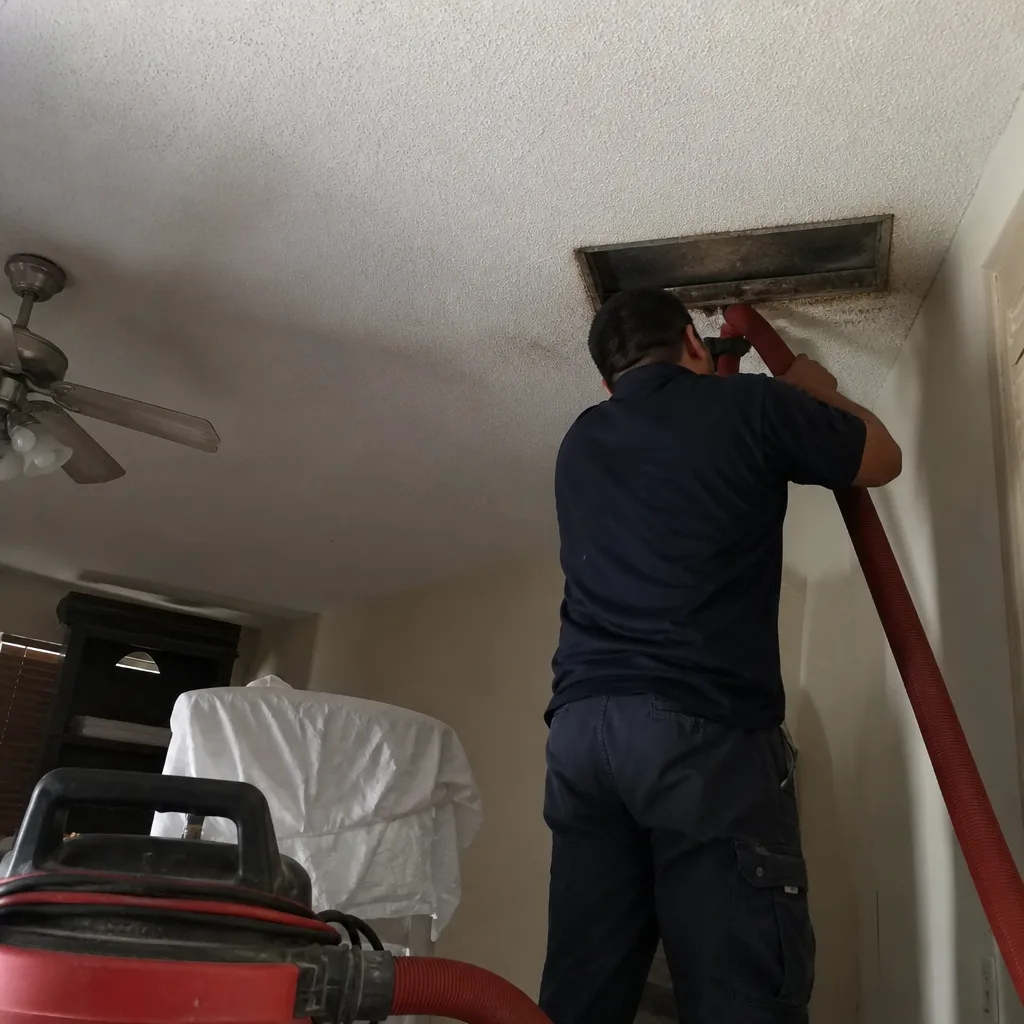
A proper post-storm duct cleaning is not a quick pass with a shop vac. It’s a methodical, two-stage job: contact cleaning combined with negative pressure. Our technicians use Rotobrush rotary contact-cleaning systems to physically agitate the debris inside the duct walls and dislodge it, then Nikro negative-air extraction pulls that loosened material out of the system rather than pushing it into the room. That’s the difference between a real clean and a blow-and-go service that displaces debris rather than removing it.
During a storm-related cleaning, there’s also a containment step. We use Abatement Technologies HEPA filtration and containment equipment to isolate the work area, which is a safeguard borrowed from remediation work rather than standard residential duct cleaning. It matters when contamination may include moisture-driven biological growth. And if we find duct damage during the cleaning, whether that’s a disconnected flex run, a crushed section, or a lined duct that’s failing, we can diagnose and repair it as part of the same visit. We clean it, and if it’s broken, we fix it. That’s the value of working with a company whose service lines cover the whole air pathway instead of just one piece of it.
Our technicians have up to 13 years of experience, and the same trained team handles air duct cleaning and any repair needed on the system. If your home also has a filtration system, we’re familiar with Guardsman, Honeywell, and Aprilaire components, so we can address filtration upgrades as part of the same visit rather than referring you elsewhere. If you’re scheduling post-storm work in Miramar, a pre-cleaning inspection that includes the air handler, all trunk and branch lines, and the dry filter setup will tell you exactly what the job involves before anything gets cleaned.
Your Dryer Vent Is a Storm-Safety Item, Too
Storm season is a good time to think about the other duct in your house. A clothes dryer vent is a fire-safety component, not a housekeeping item, and it’s the one duct where a clogged run can turn into a house fire in ordinary weather. That risk doesn’t pause for storms. In Miramar, the concern is compounded because lint that’s been sitting in a vent through a hot, humid summer can compact and the vent run itself can be exposed to storm-driven debris if it terminates on an exterior wall or a flat roof.
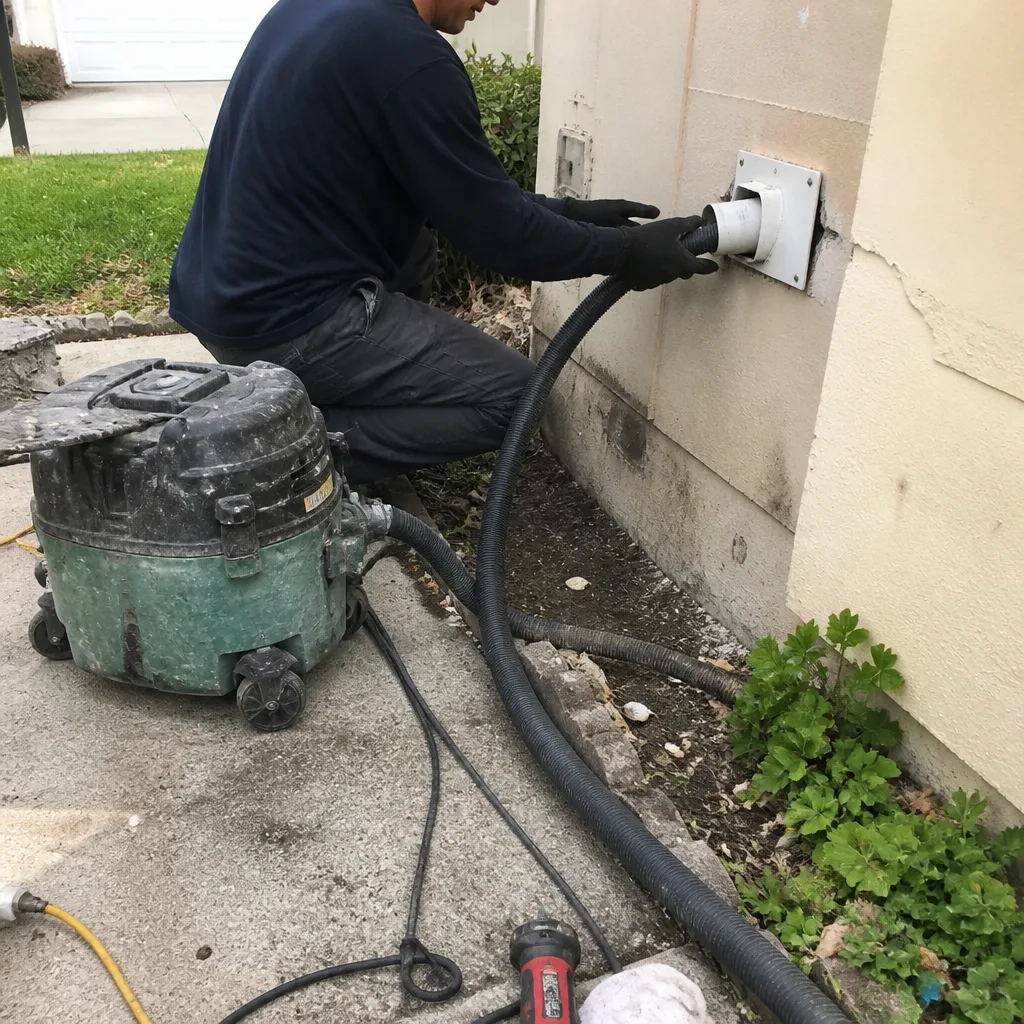
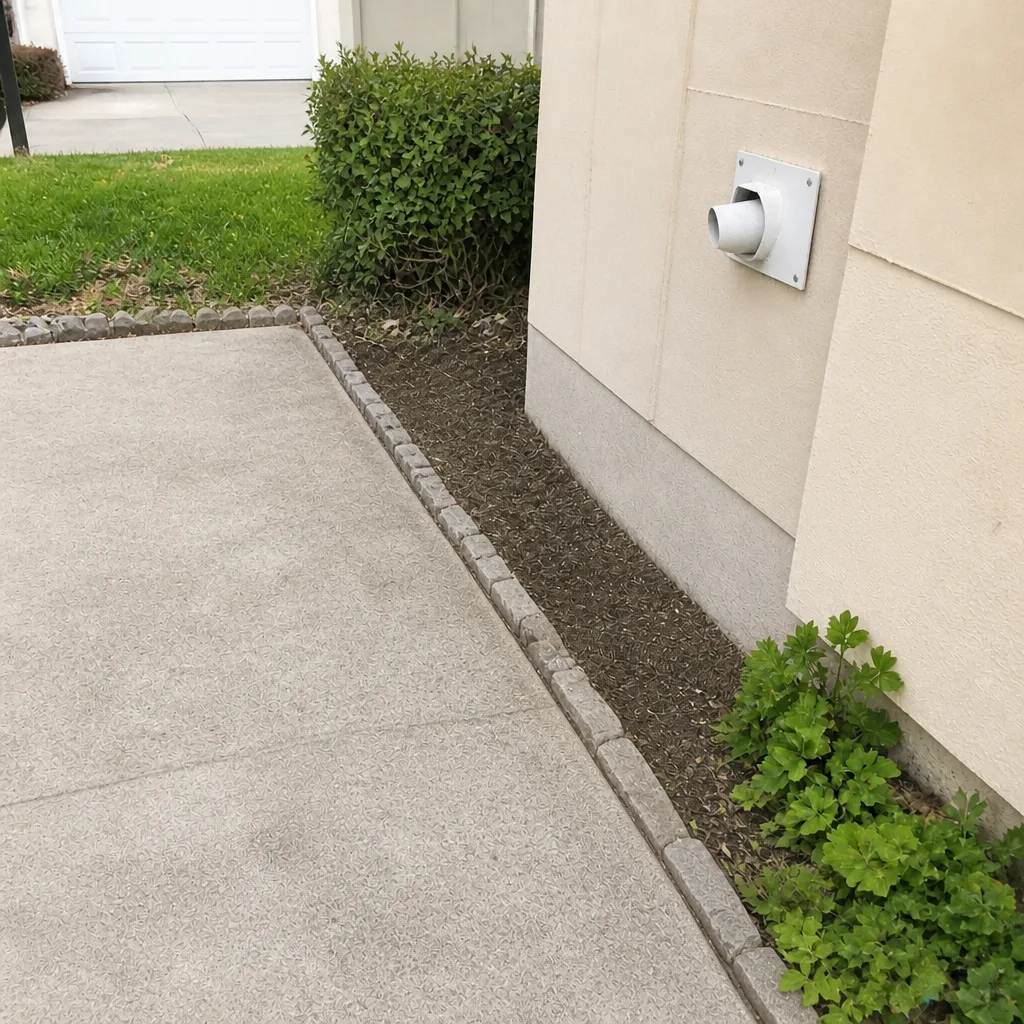
Checking your dryer vent after a storm is a matter of looking at the exterior termination. If it’s blocked by debris, that’s a quick fix before you run the dryer again. If it’s been a while since professional dryer vent cleaning, storm season is a reasonable time to schedule it. We use the same professional tooling on dryer vents that we use on duct work, because the mechanical job is the same: contact cleaning of the vent interior, followed by extraction of the loosened lint. And using the right equipment on a dryer vent matters, because a handyman-level cleaning that doesn’t reach the full vent run isn’t a fire-safety service. It’s a gesture.
If you live in a Miramar property and haven’t had your dryer vent looked at since you moved in, schedule it alongside your post-storm duct work. It’s a small addition to a larger service visit, and it addresses a leading cause of residential house fires.
Common Mistakes to Avoid
- Running the AC right after the storm to “check if it works.” If the ducts took on water or debris, running the system spreads contamination through every room. Always assess first with the power off.
- Assuming no visible ceiling stain means no duct intrusion. On flat-roof construction common in Miramar, moisture and debris can enter through rooftop penetrations and never show a drip inside. Check the air handler and attic penetrations, not just the living space.
- Cleaning up before you’ve photographed everything. Once a duct is cleaned, the evidence is gone. Photograph the contaminated returns, the air handler interior, and any visible intrusion points before anyone touches the system.
- Hiring a “blow-and-go” cleaner without containment. A cleaning that pushes air into the room without HEPA filtration or negative pressure can spread the very contamination you’re trying to remove. Ask what equipment the company uses before you book.
- Accepting a per-vent price that balloons once the technician is on site. The bait-and-switch reputation in this industry is earned. Ask for one flat price per system, in writing, before work starts, along with before-and-after photos of your own ducts.
- Ignoring the dryer vent through storm season. A clogged dryer vent is a fire risk regardless of weather. Handle it in the same visit as your post-storm duct work.
- Skipping the roof repair before the duct cleaning. If the source of moisture intrusion is unfixed, the ducts will just get contaminated again. Fix the roof penetration and the package unit curb first.
When to Call a Professional
Call a professional duct cleaning service in Miramar if any of the following are true after a storm: the ducts show visible moisture or spotting when you look inside a return grille; the air handler cabinet has water staining, rust, or a wet filter; there’s a musty odor at the registers even with the system off; or your home took on any roof damage above a duct chase or attic run. Also call if you don’t yet have pre-storm and post-storm photographs and want a professional assessment to establish the actual condition of the system. Don’t run the system until the ducts have been checked. Duct Cleaning Miramar offers free estimates in Miramar – call (877) 583-7369. We answer 24/7. Fast dispatch from 7am to 7pm, Sunday through Friday. Our technicians have up to 13 years of experience, and every estimate is written with a scope and a flat price per system.
Frequently Asked Questions
You need duct cleaning after a hurricane if the system shows any sign of moisture, debris, or contamination – a wet filter, water staining in the air handler, visible spotting, or a musty smell. If the system is confirmed dry and clean, professional cleaning isn’t strictly required but is a reasonable safeguard, since storm-driven debris can settle in the ducts without visible evidence from the grille side. Call (877) 583-7369 for a free assessment in Miramar; an honest inspection will tell you whether the work is actually needed.
Yes, sealing return grilles with plastic and tape before a storm is one of the simplest ways to reduce debris and wind-driven rain entering the duct system. Returns are the largest openings into the air pathway, so covering them takes minutes and prevents a common intrusion point. Turn the HVAC system off at the thermostat and breaker first, and remove the plastic as soon as the storm has passed and you’ve assessed the system. Call (877) 583-7369 if you want help with the pre-storm checklist.
Yes. If the duct system has taken on moisture or debris, running the system distributes that contamination through every room the ducts serve, and it pushes mold spores out of a wet duct interior into the living space. Keep the system off and assess with the power disconnected. Once a professional confirms the ducts are clean and dry, running the AC is normal. Call (877) 583-7369 to schedule a post-storm inspection in Miramar.
Post-storm duct cleaning in Miramar is priced per system, not per vent, and the final number comes from a written estimate based on the size of the system and the extent of contamination. A cleaning tied to storm remediation is scoped differently than routine maintenance, so an accurate number depends on what the inspection finds. We don’t quote a teaser price. Call (877) 583-7369 for a free estimate – the price is one flat amount per system, agreed before work starts.
Many homeowner policies cover duct cleaning when it’s part of storm remediation rather than routine maintenance, but the claim depends on documentation. Photograph the contaminated returns and registers before cleaning, photograph the intrusion source, and get a written scope from your cleaning provider that ties the work to the storm. Before-and-after photos from the cleaning itself are also strong evidence. Call (877) 583-7369 for a documented estimate you can submit to your insurer.
Beyond a post-storm assessment, most Miramar homes benefit from duct cleaning every few years, sooner if you notice musty odors, visible dust at the registers, or a recent renovation that generated debris. Homes with pets, recent construction, or a history of moisture intrusion may need it more often. The system should be inspected after any major storm regardless of the last cleaning date. Call (877) 583-7369 to schedule an inspection and get an exact quote for your home.
A professional duct cleaning should use contact cleaning equipment combined with negative-pressure extraction, not just a vacuum or a compressed-air pass. In our work, we use Rotobrush rotary contact-cleaning systems paired with Nikro negative-air HEPA extraction, plus Abatement Technologies containment equipment when the job calls for it. Ask any company what specific equipment they use before booking; a company that can name its method is a better bet than one that can’t. Call (877) 583-7369 to talk through the process for your Miramar home.
The Bottom Line
Duct preparation is a storm-safety step that most Miramar homeowners skip, and it’s one of the few preparations that also protects indoor air quality after the storm has passed. Seal returns and exposed duct penetrations before a storm. Keep the system off until you’ve checked the air handler, filter, and duct interiors for moisture and debris. Photograph everything before you clean. Then use a professional service with real equipment – contact cleaning plus negative pressure, containment where contamination might be present, and a written scope you can submit to your insurer if needed. And don’t forget the dryer vent through the same season. If you’re not sure about the condition of your system, Duct Cleaning Miramar offers free estimates. Call (877) 583-7369 for an honest assessment of what your Miramar home needs and what it doesn’t.
For a complete look at our service lines and what we cover across Duct Cleaning Miramar, start there and then book a visit. We answer 24/7. Fast dispatch from 7am to 7pm, Sunday through Friday.
Written by the team at Duct Cleaning Miramar.
See the difference
 Before
 After
 Before
 After
 Before
 After