
Last updated November 15, 2026
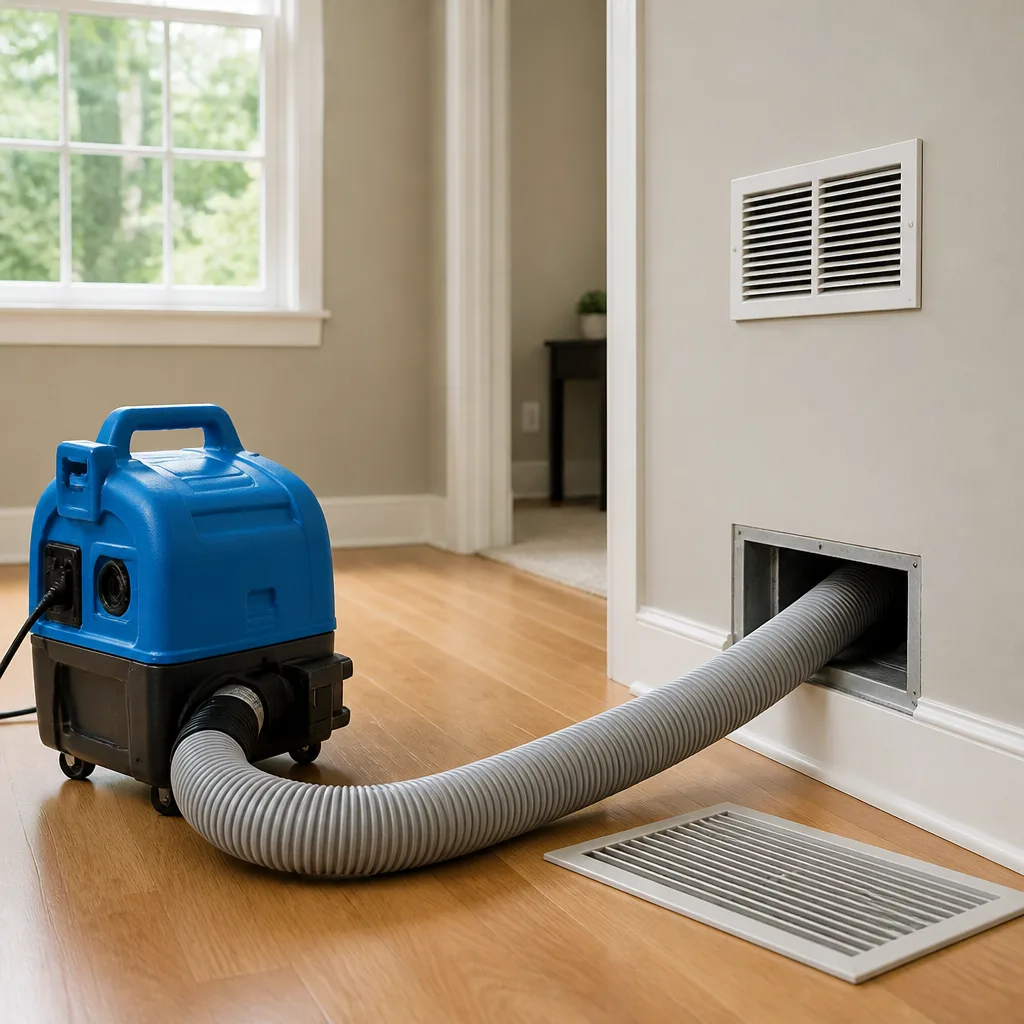 Whole-home duct cleaning
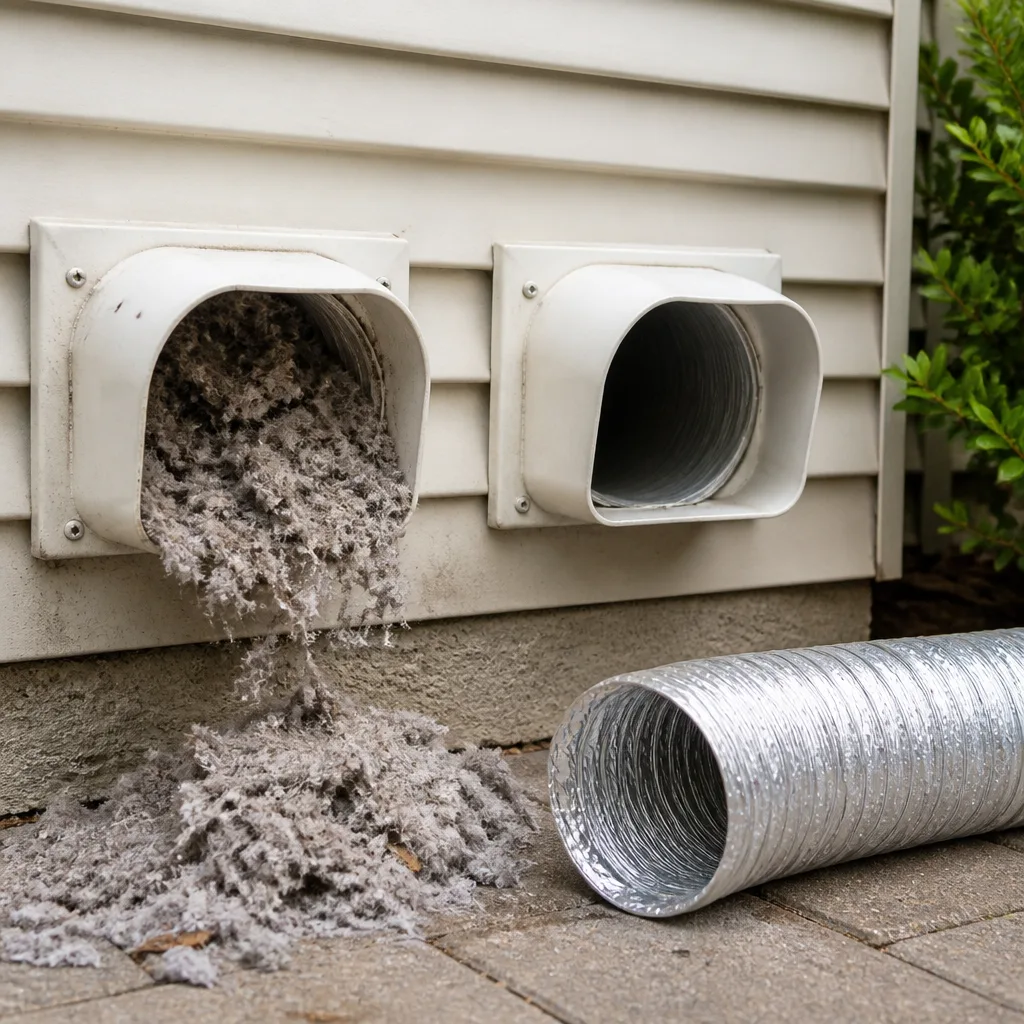 Dryer vent cleaning
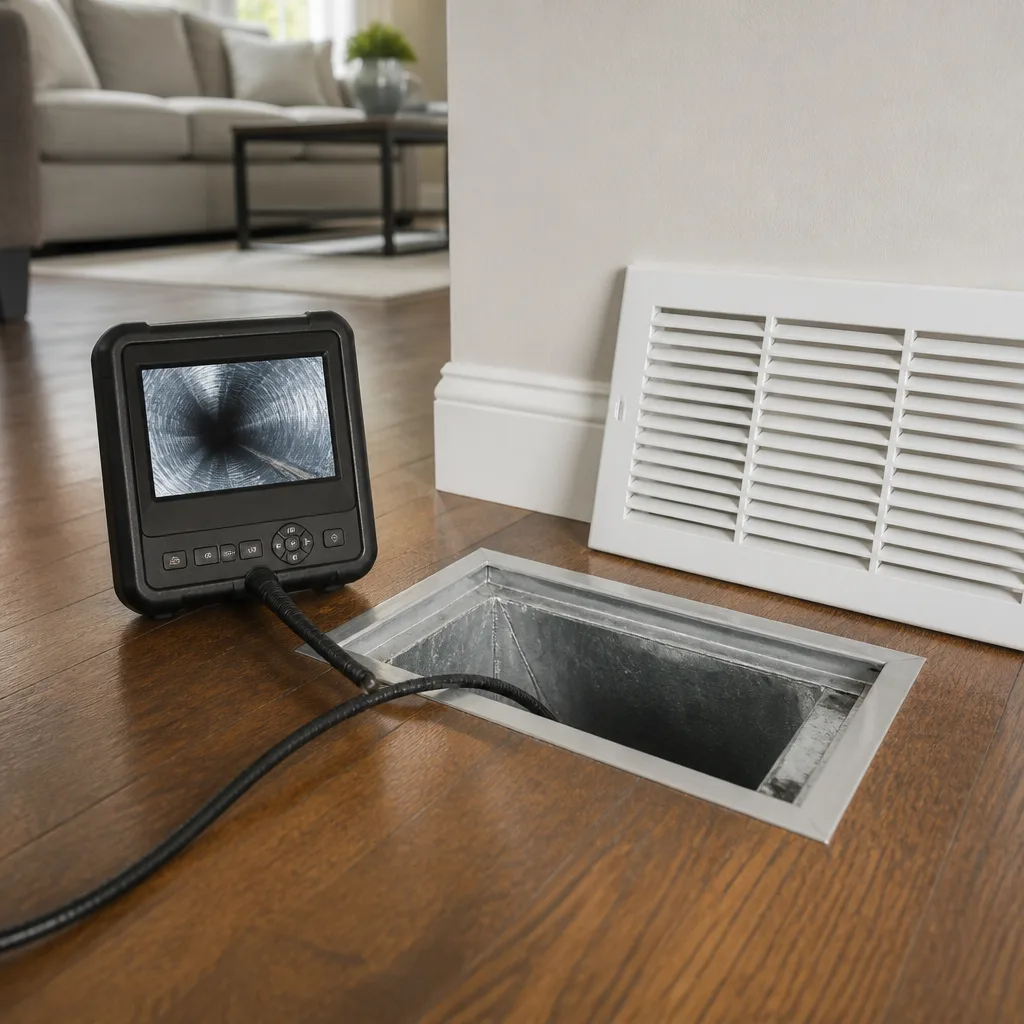 Camera inspection
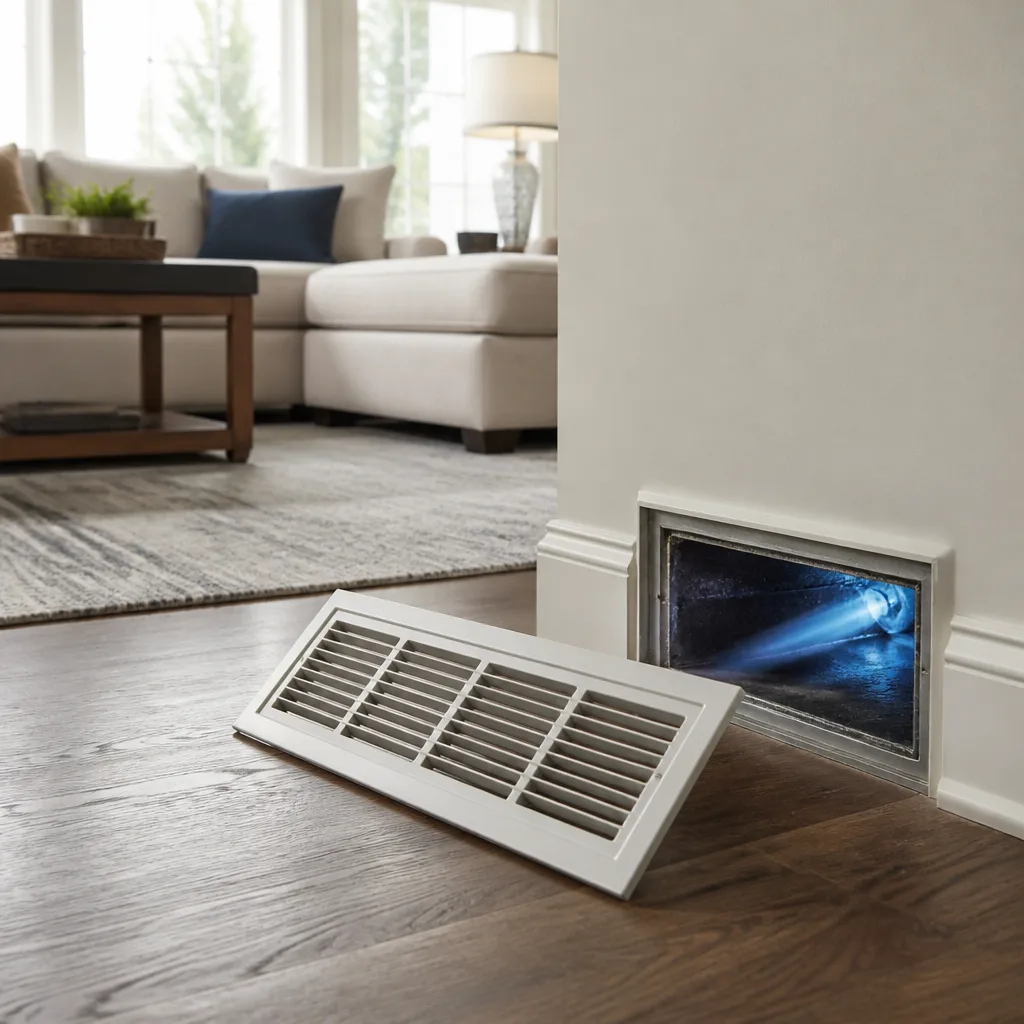 Sanitizing & deodorizing
Whole-system duct and dryer vent check with before-and-after photos - you see exactly what came out of your vents
That "$99 whole-house special" is a bait ad - the real number appears once they are in your hallway, or the "clean" is a shop-vac at the register. We photograph the inside of your ducts before and after instead.
DIY vs Professional Air Duct Cleaning: The Miramar Homeowner’s Decision Guide
Most homeowners who look into duct cleaning on their own are thinking about money. That’s backwards. The real question is mechanical, and it comes down to a tool you can’t buy at a hardware store. Loosen dust and debris inside a duct and it doesn’t disappear: it goes somewhere. A shop vac and a flexible brush can work the surface of a grille and the first stretch of duct behind it, but neither can pull a residential duct system into negative pressure all at once. Source removal, the standard professional work is measured against, needs exactly that. This guide explains what DIY cleaning genuinely accomplishes, where it stops, why improper brushing can leave your ducts worse than you found them, and how to decide when the work in a Miramar home needs professional equipment. We also cover the maintenance tasks that are worth doing yourself, because some of them are.
Quick Answer
DIY air duct cleaning can handle surface work on accessible grilles and the first section of duct, but it can’t do source removal, which requires sustained negative pressure across the whole duct system while brushes agitate the interior. A consumer shop vac can’t produce enough airflow to hold that pressure, so loose debris gets stirred up and resettled rather than captured. For a home with visible buildup, recent renovation dust, or a dryer vent that needs attention, professional equipment isn’t a luxury; it’s the only way to get the debris out of the system instead of moving it around.
Styles & brands we work with
- Whole-home duct cleaning
- Dryer vent cleaning
- Camera inspection
- Sanitizing & deodorizing
Table of Contents
- Why the DIY Question Is Really About Airflow
- What DIY Cleaning Can and Can’t Do
- The Flex Duct Problem in Miramar Homes
- Maintenance Tasks Worth Doing Yourself
- Comparing Costs by Outcome, Not Price Tag
- What a Professional Clean Actually Involves
- Why the Dryer Vent Belongs in the Same Conversation
- Common Mistakes to Avoid
- When to Call a Professional
- Frequently Asked Questions
Why the DIY Question Is Really About Airflow
Air duct cleaning, done the way the trade’s own standards describe it, is a two-part job performed at the same time. Contact cleaning loosens what’s stuck to the walls of the duct. Negative pressure captures what comes loose before it can settle elsewhere in the system. Do one without the other and you’ve either moved nothing or moved it to a new room.
That’s the gap consumer equipment runs into. A shop vac pulls a lot of suction at the nozzle, but that suction collapses the moment the hose is attached to a closed duct run. A truck-mounted or portable professional system is built to move hundreds of cubic feet per minute and hold a duct system under sustained negative pressure while a technician works a rotary brush through the run. Residential vacuums operate at a small fraction of that airflow. The difference isn’t skill or effort. It’s physics you can’t close with a longer hose or a better nozzle.
Walk into any Miramar home built in the last few decades and you’re usually looking at a compact mechanical closet, a low attic, or a soffit-chased distribution system. Short, tight runs with several turns. Those are hard to clean even with the right equipment, and impossible to pull into negative pressure with the wrong one. We’ve seen enough of these systems to know how the layout shapes the job.
So when a homeowner asks whether they can clean their own ducts, the honest answer isn’t “no, you’re not skilled enough.” It’s that the work requires a tool category the homeowner doesn’t own, and the result depends on the tool far more than on the technique.
What DIY Cleaning Can and Can’t Do
We’re not going to tell you a shop vac is useless. It isn’t. Here’s the honest split between what consumer equipment accomplishes and what it doesn’t.
What DIY cleaning handles well
- Grille and register surfaces. The face of the vent cover collects more visible dust than anything inside the duct. Removing the grille and washing it is a real improvement in appearance and airflow.
- The first 12 to 18 inches of duct behind each register. A flexible brush and a shop vac can reach into the straight section after the boot. This is the stretch a homeowner can actually do something with.
- Filter replacement. A fresh filter, changed on the manufacturer’s schedule, does more for indoor air quality in a Miramar home than any amount of surface vacuuming inside the ducts.
- Return-air grille cleaning. Returns pull in more dust than supplies, so the grille face and the immediate reach behind it benefit most from a homeowner’s hand cleaning.
What DIY cleaning can’t touch
- Branch runs beyond the first turn. Once the duct bends, a consumer brush can’t be steered through it with any control.
- The main trunk and plenum. The largest volume of accumulated debris sits in the trunk line, the section no consumer tool reaches at all.
- The air handler and evaporator coil. These need a technician who understands refrigeration and electrical systems. We don’t recommend a homeowner open that cabinet.
- Debris capture during cleaning. Without enclosure and negative pressure, loosened dust escapes into the room you’re standing in. That’s a net air quality loss, not a gain.
In our experience, the pattern is consistent: a homeowner cleans one or two registers in a room that feels stuffy, sees some dust come out, and assumes the whole system got a fraction of the same treatment. It didn’t. The duct behind the first turn, where most of the accumulation lives, was never touched.
The Flex Duct Problem in Miramar Homes
A large share of Miramar homes run on flexible duct rather than rigid sheet metal. Flex duct is a plastic inner liner wrapped in insulation and a foil or scrim jacket, and it’s the single biggest reason we tell homeowners not to send a consumer brush deep into a run.
Here’s what goes wrong. The inner liner of flex duct is thin. A stiff brush on a spinning drill or a shop vac attachment pushed hard into a bend can score, tear, or tear open the liner. Once that happens, three things follow:
- The liner tears become collection points. Rough edges catch dust and hold it, so the duct accumulates faster after the damage than before.
- Insulation fibers enter the airstream. A damaged liner can release fiberglass or plastic liner material into the supply air, which is worse than the dust you were trying to remove.
- The duct loses its thermal seal. A torn liner lets conditioned air leak or sweat, and in a humid South Florida attic, condensation on damaged duct is a breeding ground for mold.
We use contact brushes rated for flex duct, combined with air pressure and containment at the same time, so the liner is agitated without being forced. That’s Rotobrush equipment built for the purpose. A homeowner with a brush from a hardware store doesn’t have a way to control the tension or the speed, and the duct takes the damage. We also offer air duct repair as a service, which we mention because we’ve seen more homeowners than you’d expect find out afterward that the cleaning opened a problem no one was set up to fix.
Miramar’s humidity makes all of this more urgent than it sounds. Flex duct in an unconditioned attic runs warm and damp on the outside, cool on the inside, and any breach in the liner becomes a spot where condensation collects. Mold in a duct system is a much larger problem than dust in a duct system. Preventing the breach in the first place is the cheapest option available.
Maintenance Tasks Worth Doing Yourself
Some parts of the system are yours to manage. Here’s what we genuinely recommend for a homeowner to handle between professional services.
- Replace the air filter on schedule. Check the filter type the system was designed for, and change it when it’s loaded, not on a calendar guess. A clogged filter strains the blower and drives up energy use. Honeywell and Aprilaire filter media are made to specific ratings, so match what’s in place rather than upgrading the number and restricting airflow.
- Wash the supply grilles and return grille covers. Pull the covers, wash them in the sink or outside, dry them, and put them back. This is the single most visible improvement a homeowner can make on their own.
- Vacuum the immediate reach behind each return grille. Use a crevice tool or brush attachment and stop at the first bend. Don’t force anything past it.
- Check the condensate drain pan and line. In Miramar, the AC runs most of the year, which means condensate runs continuously. A slow drain can overflow and put water where it shouldn’t be. Look for standing water and clear any obvious algae growth at the drain opening. If you find water or a clog you can’t clear, call a technician.
- Look at the dryer vent exterior flap while you’re in the yard. If the flap stays closed or barely moves when the dryer runs, the vent is restricted. This is worth professional attention, not a handyman fix.
- Keep an eye on visible dust patterns at the registers. Black streaks on the ceiling around a supply register often point to a duct leak, not just dirt. Note it and mention it when you call for an estimate.
None of this replaces a full cleaning. It does keep the system from getting worse while you decide on timing.
Comparing Costs by Outcome, Not Price Tag
Here’s how we see homeowners make this comparison. They price a shop vac, a brush kit, and a few hours on a Sunday, then compare that to a professional estimate. The math looks obvious. But the comparison isn’t between two numbers. It’s between what each option leaves behind.
A DIY clean resolves surface dust on accessible grilles and the first stretch of duct behind each register. It doesn’t reduce the accumulated debris in the trunk line, doesn’t touch the air handler, doesn’t address a damaged liner, and doesn’t give you documentation of what was removed. The homeowner has spent money and a day and ended up with a system that’s cosmetically better at the vents and functionally unchanged.
A professional clean with contact cleaning and negative pressure removes accumulated debris from the whole system, produces before-and-after photos of the ducts themselves, and identifies problems like liner damage, disconnected runs, or restricted dryer venting that no DIY effort can find. The job is done once, rather than repeated every few months.
We price per system, not per vent. One flat price for the whole system, agreed before work begins, written down. No coupon price that becomes a much larger number once the technician is on site. No per-register charge that turns a modest system into a surprise. When you compare quotes in Miramar, ask specifically whether the number covers the entire system or only a portion of the vents, and ask for a written scope before the work starts. That’s how you tell the two apart.
What a Professional Clean Actually Involves
If you’ve never watched a professional duct cleaning, the process looks different than most homeowners expect. Here’s the rundown, in order, so you know what you’re paying for.
- Inspection and system mapping. A technician walks the duct layout, counts the registers and returns, and locates the air handler. The right tools for the job depend on the duct type, and Miramar homes usually have a mix of flex and rigid runs.
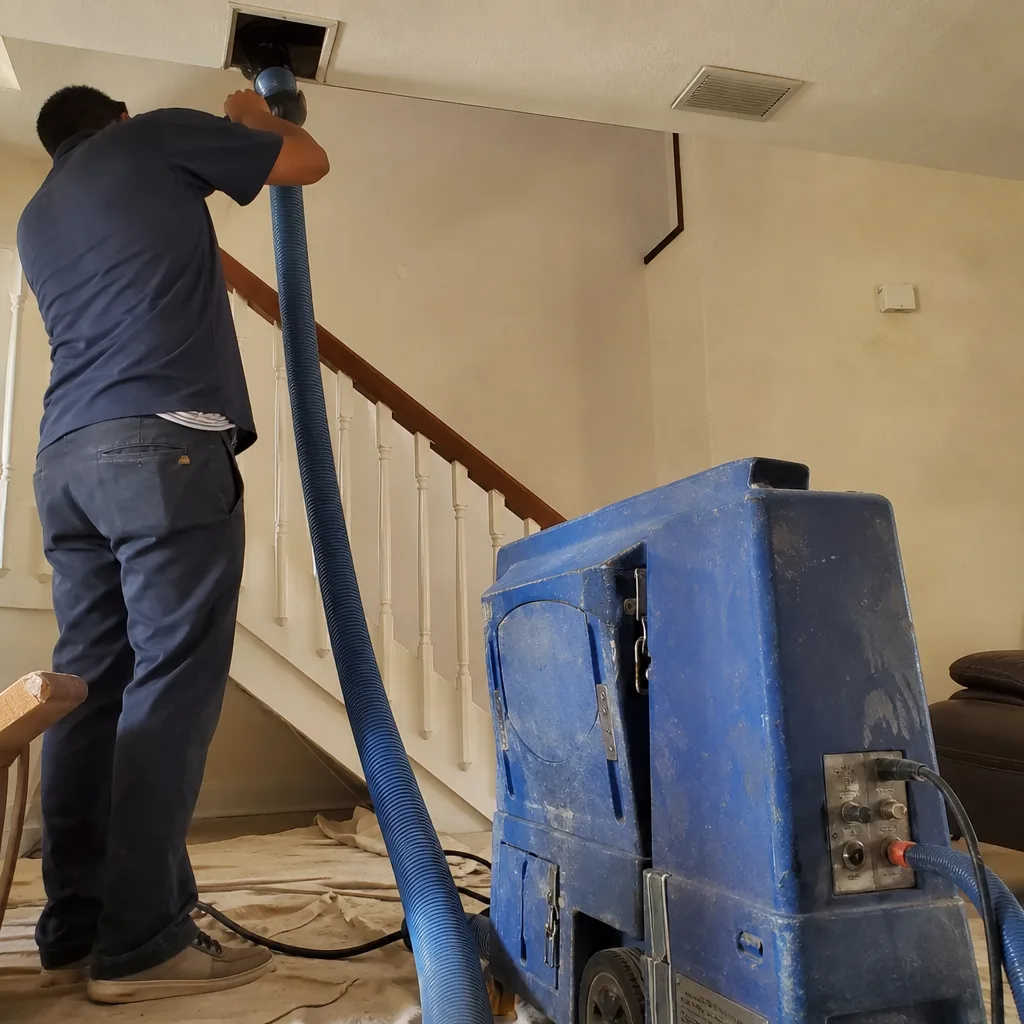
- Containment setup. Access ports are cut at the trunk line and at strategic points in the branch runs. Negative pressure is established at the vacuum end so the duct system becomes a sealed environment under vacuum. We use Abatement Technologies containment equipment and HEPA filtration here, the same approach remediation work uses, because the dust that comes out of ducts shouldn’t end up back in your living room.
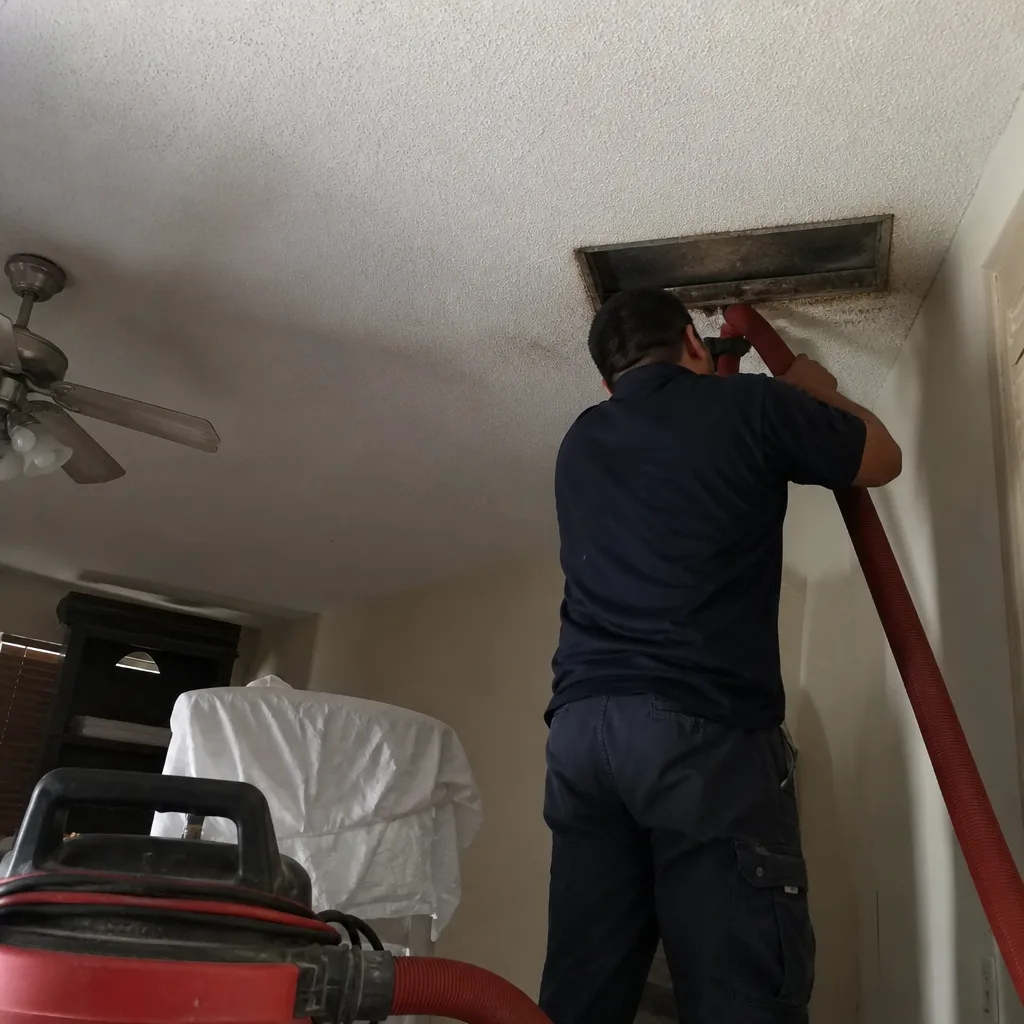
- Contact cleaning. A rotary brush is fed through each branch run and the trunk. The brush runs at controlled speed against the duct walls, loosening debris from the surface. Rotobrush contact cleaning is what we use, and it’s why we can work flex duct without damaging the liner.
- Extraction under negative pressure. Nikro negative-air equipment pulls the loosened debris out through the vacuum port and into HEPA-rated filtration. Nothing is recirculated into the home.
- Air handler and coil check. The blower, evaporator coil and drain pan are inspected and cleaned where appropriate. This is often where a homeowner learns their return-air problem is actually a filtration problem, and Honeywell or Aprilaire media upgrades can address it from the source.
- Documentation. Before-and-after photos of the ducts, at the same vantage points, so the homeowner sees what was removed. This is the check on whether the work was actually done, and it’s what we hand over at the end of the visit.
The whole job takes hours, not minutes. Truck-mounted systems that clean by blowing air through the ducts without contact cleaning and without the containment step aren’t doing the same work, even if the price on the invoice looks similar.
Why the Dryer Vent Belongs in the Same Conversation
A dryer vent is not a household chore. It’s a fire-safety system, and the U.S. Fire Administration’s most-cited figures attribute a substantial share of residential clothes-dryer fires to a failure to clean the vent. We treat dryer vent cleaning in Miramar the same way we treat duct cleaning: professional tooling, correct technique, and a thorough job.
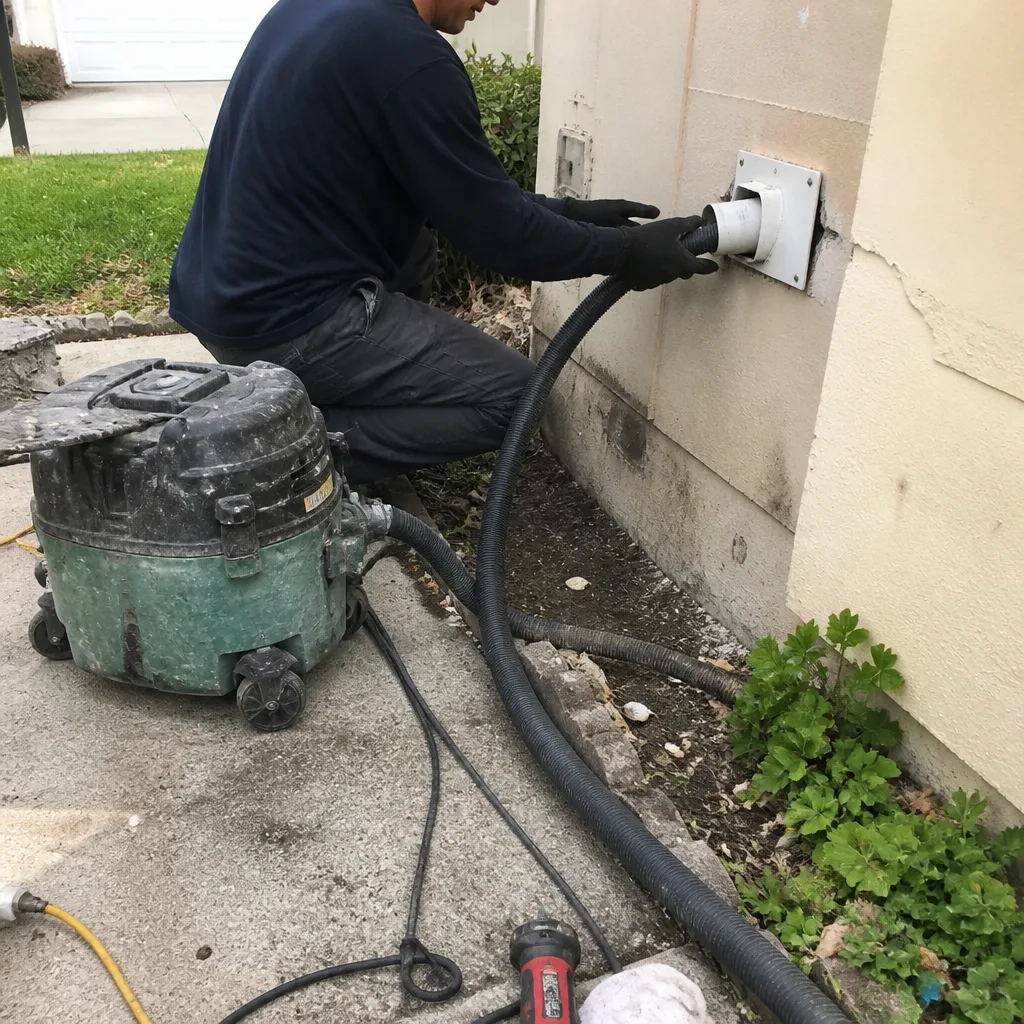
Here’s why the DIY comparison fails for the dryer vent too. A homeowner with a flexible vent brush can work the first stretch of the vent. What a brush can’t do is navigate multiple 90-degree elbows, reach the transition duct behind the dryer, or clear the exterior cap, where lint packs the tightest. That packed lint is what ignites. A long-handled brush with a shop vac at the other end removes some lint from a straight run and leaves the trapped lint in place.
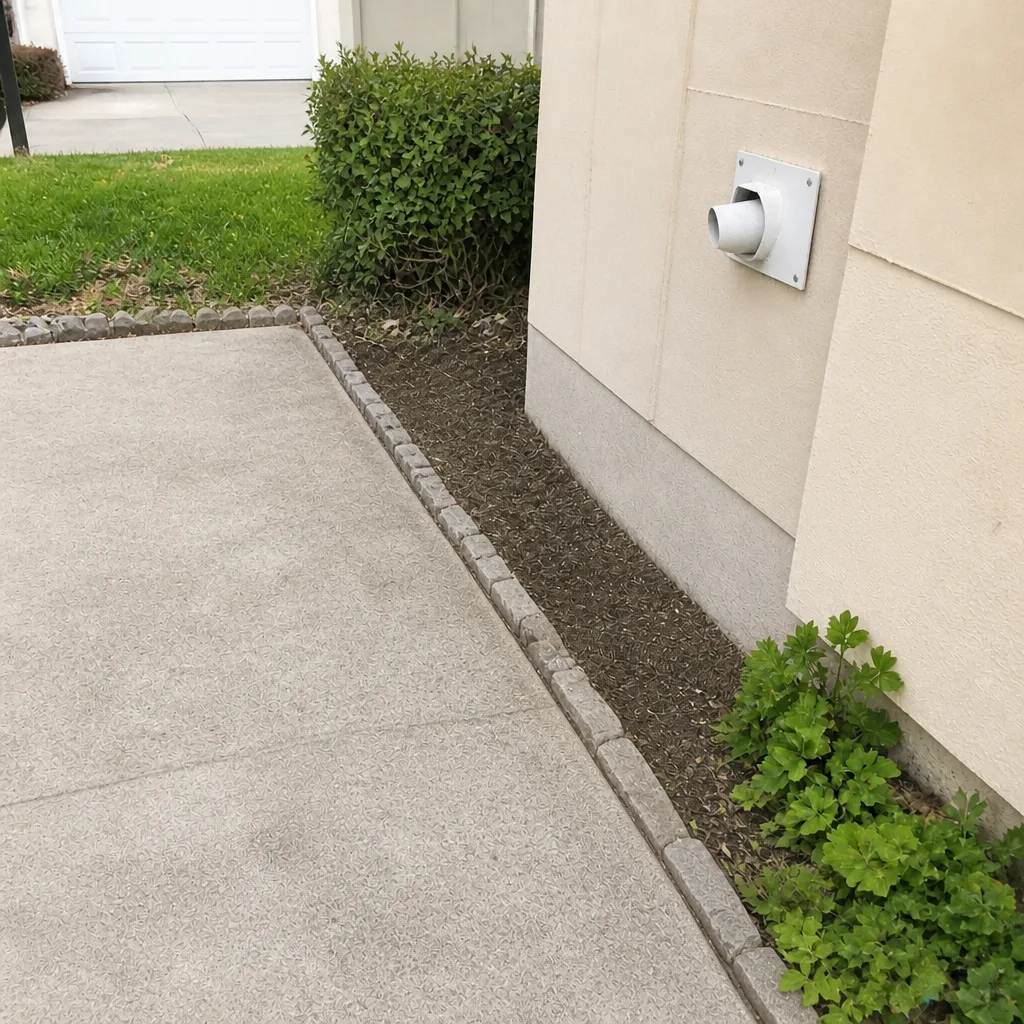
We clean dryer vents with the same professional tooling and negative pressure we use on air ducts, including the exterior termination, and we clear the transition duct behind the dryer. If the vent has been ignored for years, that’s where the blockage lives. If your dryer is taking noticeably longer to dry a load, or the exterior flap is slow to open, that’s the signal to have it looked at. It’s a fire-safety service, not a housekeeping item, and it belongs on the same maintenance schedule as the ducts and the filter.
For a deeper look at how duct cleaning works across the whole system, see our guide to air duct cleaning in Miramar, and for the dryer vent process specifically, dryer vent cleaning. If you’re comparing neighborhoods, the Miramar page covers where we work and what to expect.
See the difference
 Before
 After
 Before
 After
 Before
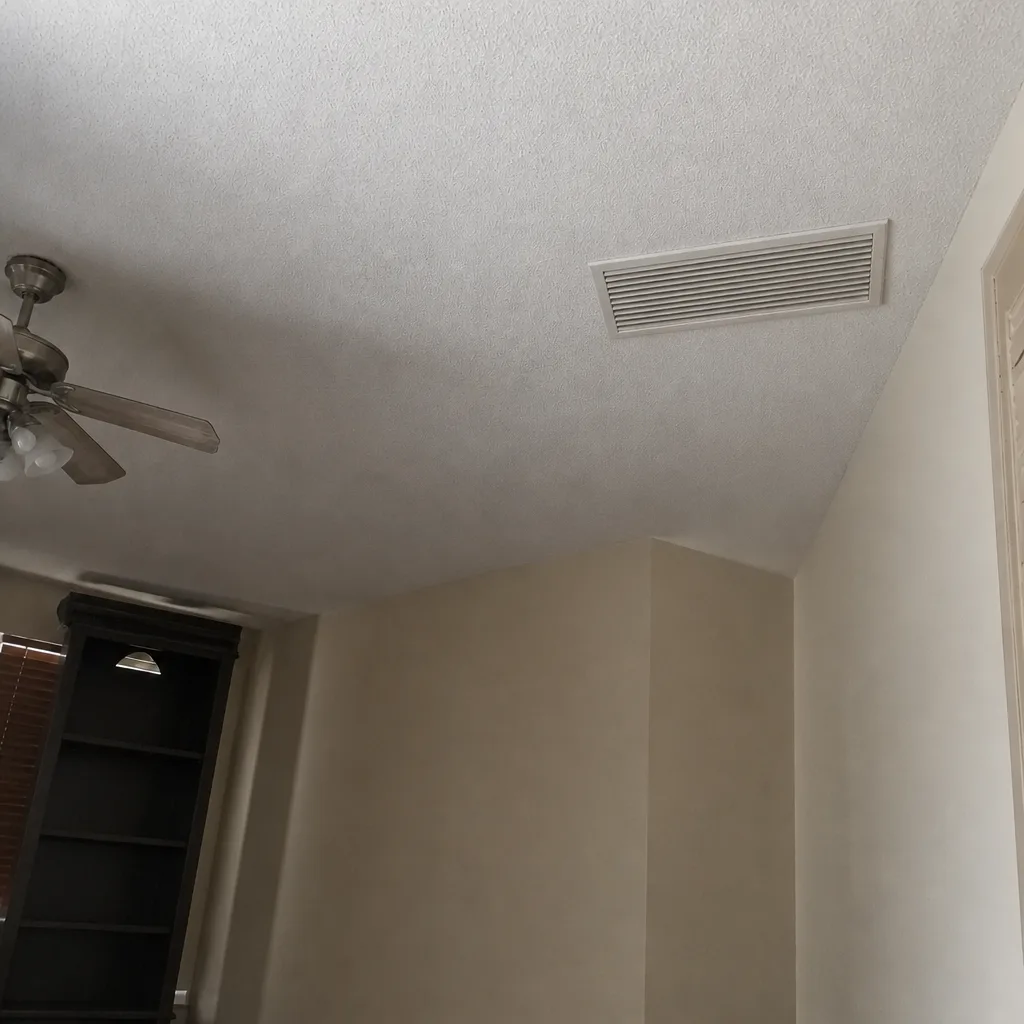 After
Common Mistakes to Avoid
- Pushing a consumer brush past the first turn. A shop vac or drill brush in a flex duct can score the liner, and once it’s damaged the ducts collect debris faster than before. In Miramar’s humid attic conditions, that damaged liner also becomes a spot for condensation and mold.
- Buying the cheapest quote without asking what it covers. Some low quotes price per vent and clean only what the technician can reach with a shop vac. Ask whether the number covers the whole system and whether the price is fixed in writing before work starts.
- Assuming a filter upgrade fixes a duct problem. A better filter captures more of what passes through it, which is useful; it doesn’t remove debris already stuck in the ducts. The two work together, not as substitutes.
- Ignoring the exterior dryer vent flap. A flap that stays closed while the dryer runs means restricted airflow and packed lint. That’s a fire-safety signal, not something to put off.
- Skipping a filter change because the AC is running “fine.” A restricted filter can push the system to work harder in a Miramar home where the AC runs year-round, which shortens equipment life. Check the filter on a schedule, not by feel.
- Relying on a chemical duct spray or “duct fogging” as a substitute for cleaning. Spraying the inside of a duct doesn’t remove debris. It masks the surface. Real cleaning removes the accumulation.
- Assuming one professional visit covers everything forever. Duct cleaning isn’t a permanent reset. Over time, dust accumulates again, especially in homes with pets, construction near the house, or heavy year-round AC use. Plan on periodic attention, not a one-and-done.
When to Call a Professional
DIY maintenance is worth doing. Here’s where it stops and a professional job becomes the right call.
- You see visible dust or debris at multiple registers. That’s a sign the accumulation is beyond the first section of duct and lives in the trunk.
- You’ve recently renovated or moved in after one. Drywall dust, sawdust and construction debris settle deep into duct runs. No shop vac will reach it.
- You hear the system running harder than it used to. Restricted airflow can point to duct buildup, a filter problem, or a duct leak, and only an inspection separates them.
- Members of the household notice more dust, allergy symptoms, or stuffiness indoors. The source may be the ducts, the filter, or both. A professional inspection finds out.
- The dryer takes longer to dry a load, or the exterior flap stays closed. Dryer venting is a fire-safety issue, and it belongs to professional tooling from start to finish.
- You suspect duct damage. A technician who offers air duct repair as part of the same visit can find and fix the problem in one stop rather than leaving you with a diagnosis and a second call to schedule.
Duct Cleaning Miramar offers free estimates in Miramar. Call (877) 583-7369. We answer 24/7. Fast dispatch from 7am to 7pm, Sunday through Friday.
Frequently Asked Questions
A shop vac can clean the first 12 to 18 inches of duct behind a register and the grille surface, but it can’t generate the sustained negative pressure across the whole duct system that source removal requires. Consumer vacuums move a small fraction of the airflow a professional system produces, so loosened dust in the trunk line stays behind and can resettle in the home. For surface dust behind a vent, a shop vac is fine. For a full system clean, it isn’t. Call (877) 583-7369 for a free estimate if you want to know what your system actually needs.
NADCA source removal refers to the industry standard for duct cleaning that combines contact cleaning with sustained negative pressure so debris is physically removed from the system rather than disturbed. The standard requires the entire duct system to be under negative pressure at the same time as brushes agitate the interior. A residential shop vac can’t sustain that. If a quote from any company doesn’t describe both contact cleaning and enclosed extraction, it isn’t doing source removal.
It can. Flex duct has a thin plastic inner liner, and a consumer brush pushed past a bend can score or tear it. Once the liner is damaged, the duct collects dust more aggressively, the liner can release fibers into the supply air, and the thermal seal is compromised. In Miramar’s humid conditions, condensation on a damaged liner can lead to mold. Professional equipment uses controlled speed and pressure with brushes rated for flex duct to avoid exactly this damage.
There’s no single answer that fits every home. Pets, smokers, recent renovations, and how carefully filters have been maintained all shift the schedule. Homes with year-round AC use, which is standard in Miramar, often need attention more frequently than a comparable home in a cooler climate. A professional inspection is the honest way to find out, and the estimate is free. Call (877) 583-7369 to book one.
The dryer vent is a separate system from the HVAC ducts, but it belongs in the same maintenance conversation. Clean it at the same time as the ducts. A clogged dryer vent is a well-documented fire hazard, and a long brush and shop vac won’t clear the elbows, transition duct, or exterior termination where lint packs in. We clean dryer vents with the same professional tooling as duct cleaning, exterior cap included.
Because the work is different. A low quote often prices per vent, uses truck-mounted blowing equipment without contact cleaning, and skips containment, so debris gets pushed around rather than removed. A quote that covers a whole-system clean with contact cleaning, contained extraction and before-and-after photos is doing more of the actual job. Ask specifically whether the quoted price covers the entire duct system in writing, and call (877) 583-7369 for an honest quote to compare against. Estimates are free.
The Bottom Line
The DIY duct cleaning question is really a question about equipment capability, not about whether you’re handy enough. A consumer shop vac can’t sustain the negative pressure source removal requires, so the work it does is limited to the first section of duct and the grille surface. That’s worth doing on its own, but it isn’t a duct cleaning. In Miramar, flex duct makes the stakes higher, because a poorly controlled brush can tear a liner and leave the system worse than before. Replace your filter, wash your grilles, check the drain pan, watch the dryer vent flap. When the accumulation runs deeper than the first turn, or the dryer vent needs attention, that’s the point to bring in professional tooling. Duct Cleaning Miramar connects you with technicians who have up to 13 years of experience, using Rotobrush contact cleaning, Nikro negative-pressure extraction, and Abatement containment, with air duct repair available on the same visit. Explore the full range of what we do at Duct Cleaning Miramar. Call (877) 583-7369 for a free estimate. We answer 24/7. Fast dispatch from 7am to 7pm, Sunday through Friday. We’re closed Saturday.
Written by the team at Duct Cleaning Miramar.