
Last updated November 15, 2026
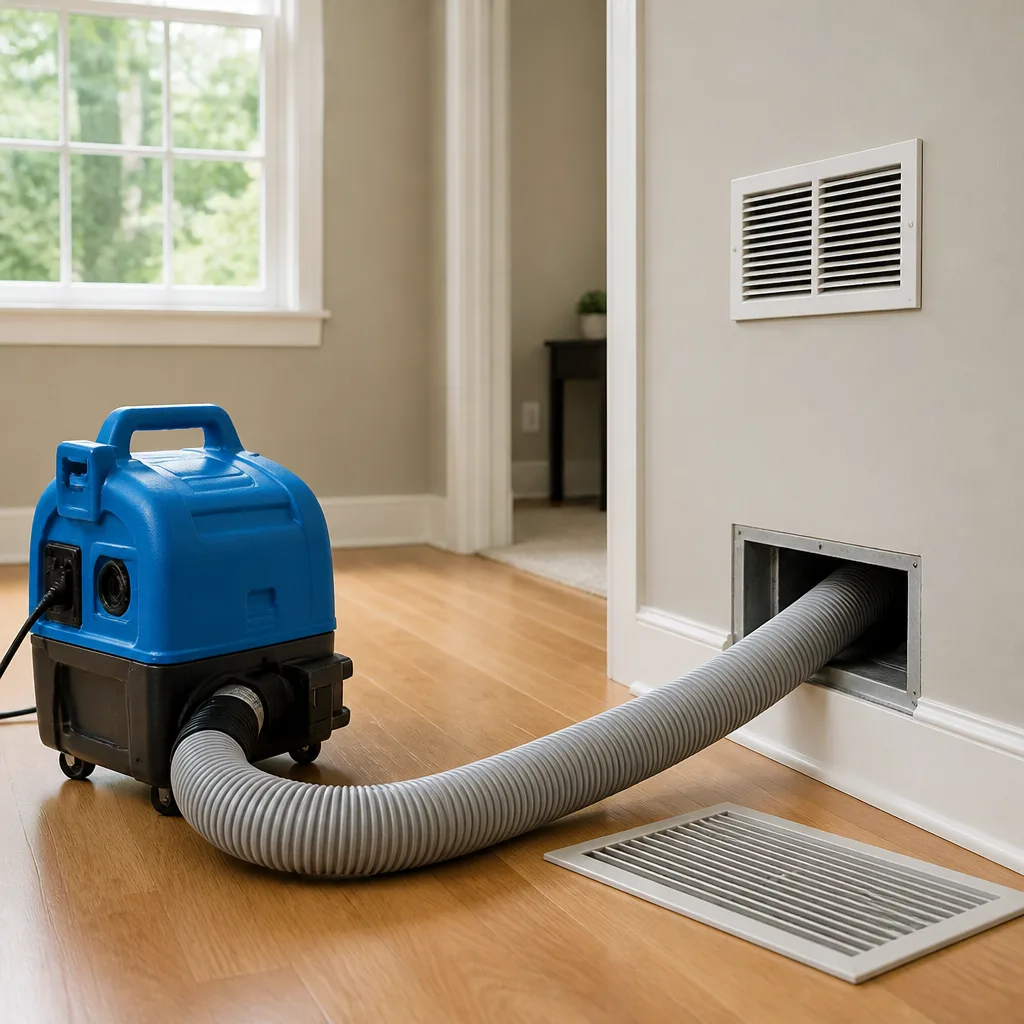 Whole-home duct cleaning
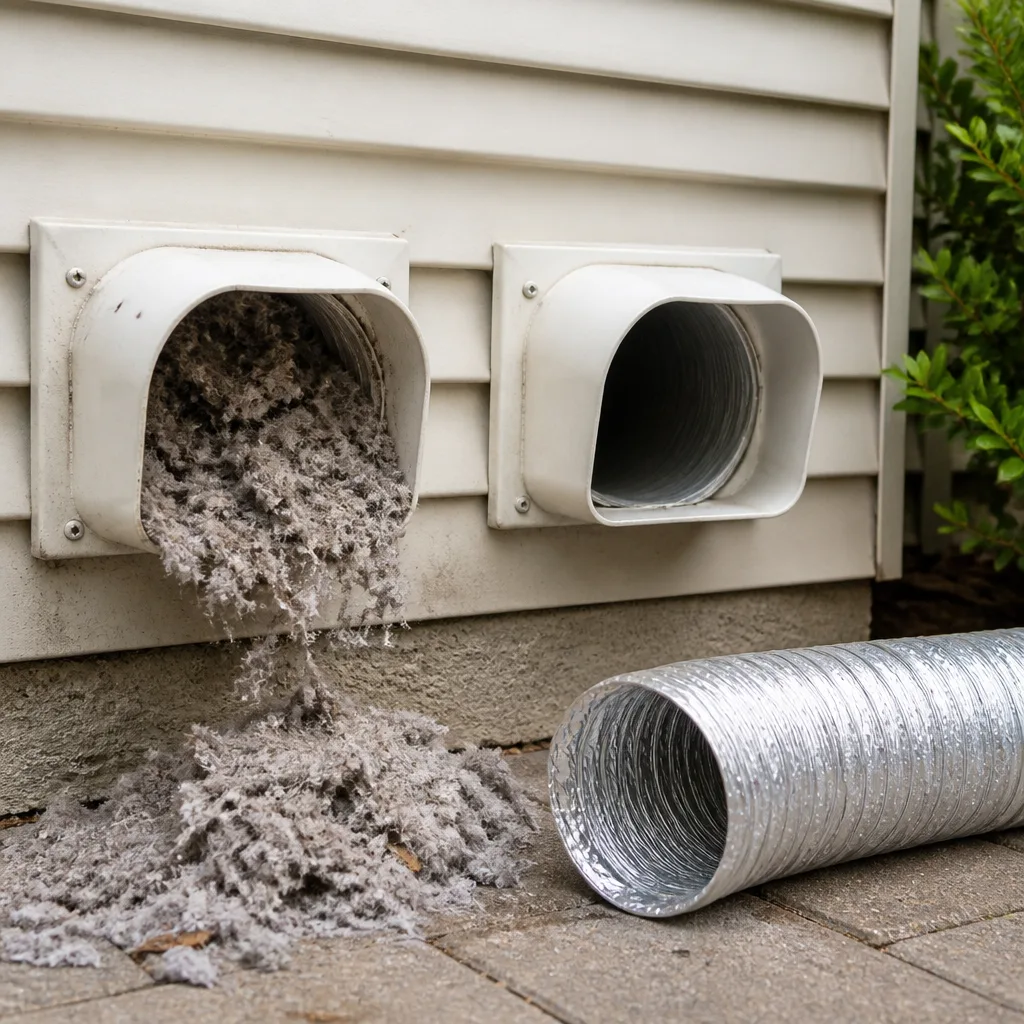 Dryer vent cleaning
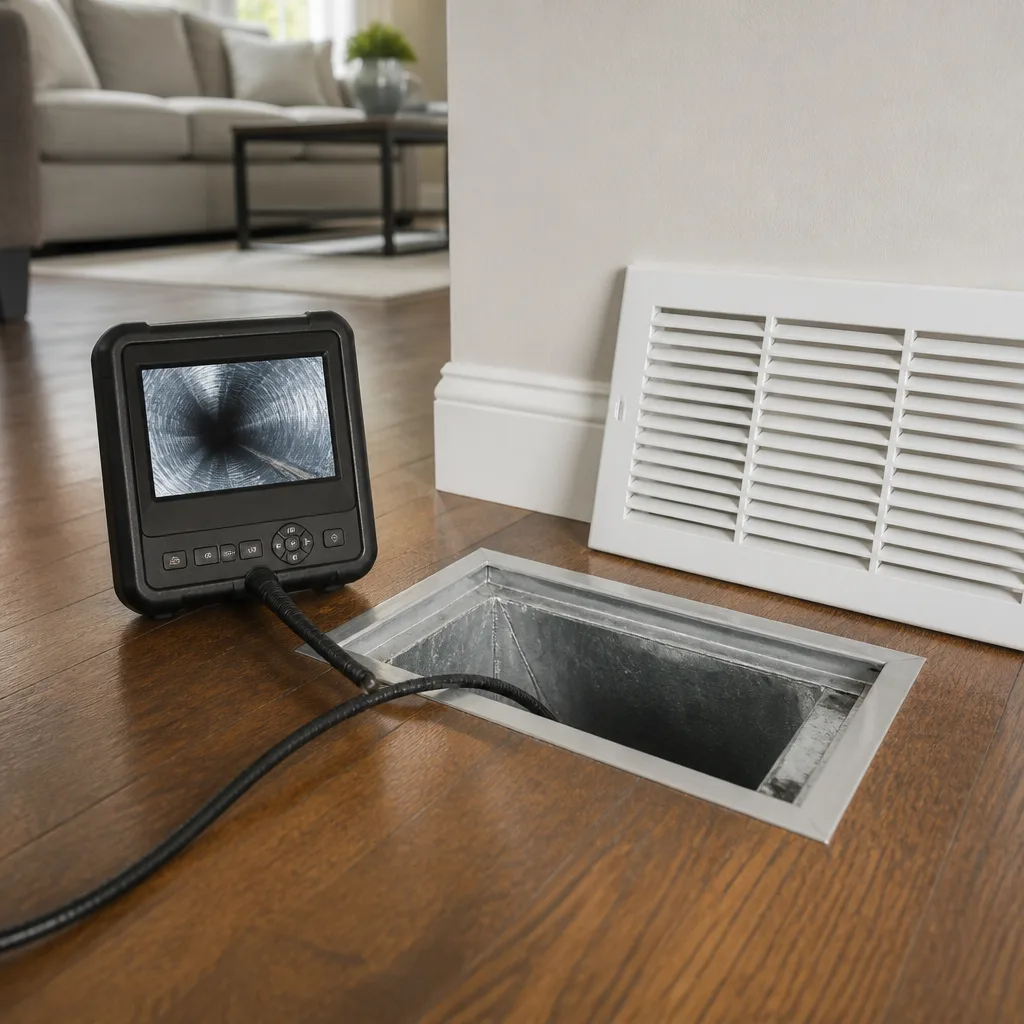 Camera inspection
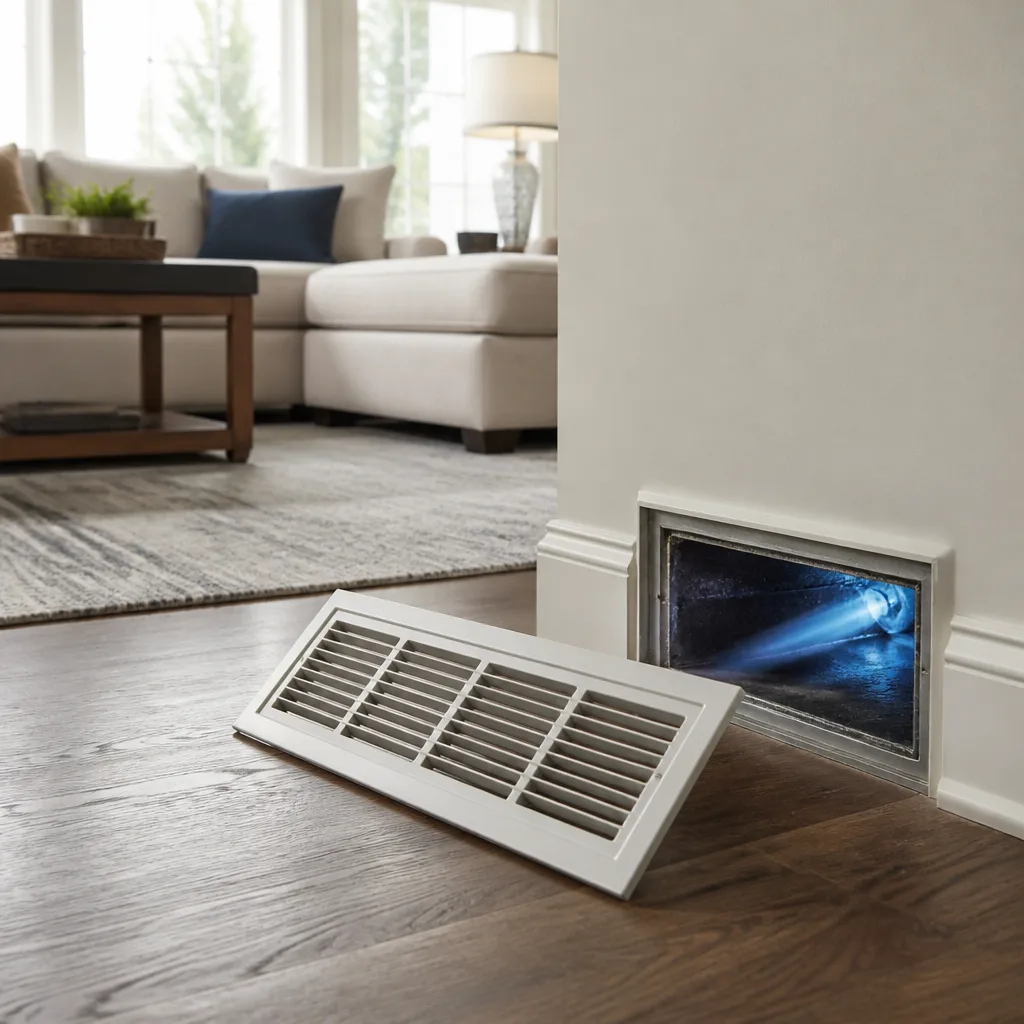 Sanitizing & deodorizing
Whole-system duct and dryer vent check with before-and-after photos - you see exactly what came out of your vents
That "$99 whole-house special" is a bait ad - the real number appears once they are in your hallway, or the "clean" is a shop-vac at the register. We photograph the inside of your ducts before and after instead.
Seasonal Air Duct Cleaning Care for Miramar: Year-Round Homeowner’s Guide
Most seasonal maintenance advice assumes your HVAC system gets a long winter off. In Miramar, it doesn’t. Homes here run air conditioning roughly 10 to 11 months a year, so “seasonal” care isn’t about switching the system on in spring and off in fall. It’s about matching your duct maintenance to a calendar that turns on hurricane season, a dry winter stretch, and a summer occupancy surge. Each one loads your ductwork differently. In this guide, you’ll learn how the Miramar year actually maps onto duct health, what to check before and after storm season, and why late summer is the most practical window for a professional cleaning. We’ll keep the advice specific to this city’s climate and housing, not a generic checklist you could run in any state.
Quick Answer
Air duct cleaning in Miramar works best when it’s timed to the local calendar rather than the traditional spring-cleaning schedule. The most practical annual window is late summer, right after the June-through-August occupancy surge and before hurricane season peaks, so your system enters storm season with clean ducts and verified integrity. A professional whole-system cleaning combined with an integrity check before and after storm season keeps both air quality and the ductwork itself in good shape year-round.
Styles & brands we work with
- Whole-home duct cleaning
- Dryer vent cleaning
- Camera inspection
- Sanitizing & deodorizing
Table of Contents
- Why Miramar’s Climate Breaks the Standard Seasonal Guide
- Pre-Hurricane Season: Checking Duct Integrity Before the Storms
- Post-Storm Protocol: Assessing Duct Damage After a Weather Event
- Dry Season (November to April): Why Low Humidity Isn’t Low Risk
- Summer Occupancy Surge: What June to August Does to Your Return Ducts
- Back-to-School: The Most Practical Annual Cleaning Window
- What Professional Duct Cleaning Actually Involves
- What You Can Check Yourself and What Needs a Pro
Why Miramar’s Climate Breaks the Standard Seasonal Guide
Seasonal duct care in Miramar looks nothing like the version written for colder parts of the country. There, the transitions are hard: heat on, heat off, a furnace that sits idle for months, a spring window to clean everything before the cooling season. Here, the system never really stops. Air conditioning runs through most of the year, windows open during the cooler months, and the outdoor environment throws storms, humidity swings, and pollen at the home in patterns northern guides don’t account for.
That means the meaningful seasonal markers in Miramar aren’t temperature switches. They’re events on the local calendar:
- Hurricane season, which runs from June through November and creates two distinct duct-care moments: preparation before, assessment after.
- The dry season, roughly November through April, when lower humidity makes homeowners open windows and rely less on the AC, changing what gets pulled into the system.
- The summer occupancy surge, June through August, when school is out, family activity is at its peak, and return ducts load up faster than any other time of year.
- The back-to-school shift, when the household routine resets and a professional cleaning becomes easiest to schedule and most useful to complete.
If you’ve been following a generic “clean your ducts every few years” rule, the result is guesswork. Matching the work to these four markers is more useful for a home in Miramar than any fixed interval. The rest of this guide walks through each one.
Pre-Hurricane Season: Checking Duct Integrity Before the Storms
Before hurricane season, the priority isn’t just whether the ducts are clean. It’s whether they’re sealed. A duct system with disconnected joints, torn flex runs, or loose connections is a liability in a storm, not because the wind reaches the ducts directly, but because a compromised system turns a small intrusion of debris or water into a much bigger problem afterward. Checking integrity before the season is how you avoid a repair turning into a replacement.
Here’s what that pre-season review typically covers:
- Inspect accessible duct runs for disconnected sections, crushed flex, or gaps at the joints, especially in the attic, garage, and crawlspaces where heat and settling stress the connections most.
- Confirm the return side is intact. Loose returns pull unfiltered attic or garage air into the system, which is exactly what you don’t want heading into storm season.
- Check the filter and filtration setup. If your home runs a Honeywell or Aprilaire filtration unit, this is the moment to confirm it’s clean and functioning, not just present.
- Clear the condensate and drain lines so a storm season of heavy AC use doesn’t back up into the air handler.
- Schedule a full cleaning if the run has gone longer than usual, so the system enters the season with a clean, unobstructed pathway.
One more thing worth doing before summer storms: knowing where the HVAC system sits relative to storm-vulnerable areas. Attic-mounted air handlers and duct runs under roof decking face the highest risk from roof damage during a weather event, and homes in Miramar’s lower-lying neighborhoods carry a bit more flood-risk consideration in the garage and ground-level return paths. If ducts need repair, we close that gap ourselves rather than handing the job to a subcontractor. We clean it, and if it’s broken, we fix it. That continuity matters when the repair is happening on a storm-season deadline.
Post-Storm Protocol: Assessing Duct Damage After a Weather Event
After a serious storm, the question most homeowners ask is whether the ductwork is safe to run. The honest answer: it depends on what intruded. Three things can compromise a duct system after a storm, and each calls for a different response.
1. Floodwater intrusion
If water reached the air handler, the return ducts, or any ground-level duct run, the system should not be run until it’s been evaluated. Wet duct liner and wet insulation inside the system create conditions that a brush-and-vacuum clean can manage only after the source of moisture has been addressed. The ducts themselves may need to be opened and inspected before any cleaning begins.
2. Roof damage
Attic-mounted ducts sit directly below the roof deck. Missing shingles, a compromised roof, or an open deck can let rain, debris, and insulation into the attic and into the duct runs. A visual inspection of the attic and duct exterior is the first step, followed by taking apart the runs where the intrusion is suspected.
3. Debris and outdoor air entry
High winds and pressure changes can destabilize connections, push debris into return plenums, and force unfiltered outdoor air into the system through gaps that were small before the storm. Even if nothing is visibly damaged, a system that was running during the event should be inspected.
Post-storm cleaning isn’t just tidying up. It’s a diagnostic step. That’s a big part of why we deploy Abatement Technologies containment and HEPA filtration during service, a standard borrowed from remediation work rather than typical of residential cleaners. When contaminants or moisture have been introduced, containment and capture keep the process from spreading the problem through the home. If the storm season has passed and you’re unsure whether the system took on damage, the right move is a professional evaluation, not running it and hoping.
Dry Season (November to April): Why Low Humidity Isn’t Low Risk
When the humidity drops and the AC runs less, it’s easy to assume the duct risk drops with it. It doesn’t. Dry season in Miramar shifts the contaminant load rather than reducing it. Windows stay open longer. Outdoor air quality rises and falls with pollen, nearby construction dust, and traffic. And the AC system, running intermittently, spends more time pulling unfiltered outdoor air through gaps and loose connections it would otherwise pressurize against.
Three things change for a duct system in the dry season:
- More open-window hours mean more dust settles into furniture, floors, and surfaces that eventually feed back into return ducts. Foot traffic and daily living push more of that debris toward the return grilles.
- System cycling is more variable. The AC starts and stops more, which means more pressure changes at the duct joints and more opportunities for air to move through gaps instead of through the filter.
- Filters load differently. A filter is working harder in the dry season if the outdoor air is carrying pollen or dust from neighbors’ landscaping and construction, and it needs more frequent checks than the calendar suggests.
A useful dry-season habit is a monthly glance at the filter and return grilles, and a quick check that the ducts aren’t visibly dusty at the register edges. If the home has a whole-house air-quality system, it’s also a good window to have filtration components confirmed and serviced. That’s part of the reason we work with Honeywell and Aprilaire systems directly. Checking the ducts without checking the filtration side leaves half the air pathway unexamined. We work on the whole air pathway, not just the part the vacuum reaches.
Summer Occupancy Surge: What June to August Does to Your Return Ducts
June through August is when Miramar homes run at peak load. School is out, family activity is high, doors and windows cycle constantly, and the AC system runs longer and harder than any other time of year. All of that activity has a specific effect on the return side of the duct system. The return ducts are the intake: every time they cycle air, they’re pulling whatever is floating in the house toward the filter, and the more people and activity there are, the more material there is to pull.
What we watch for during the summer surge:
- Faster filter loading. Filters that lasted a couple of months in the dry season can load up faster with more household particulate in the air.
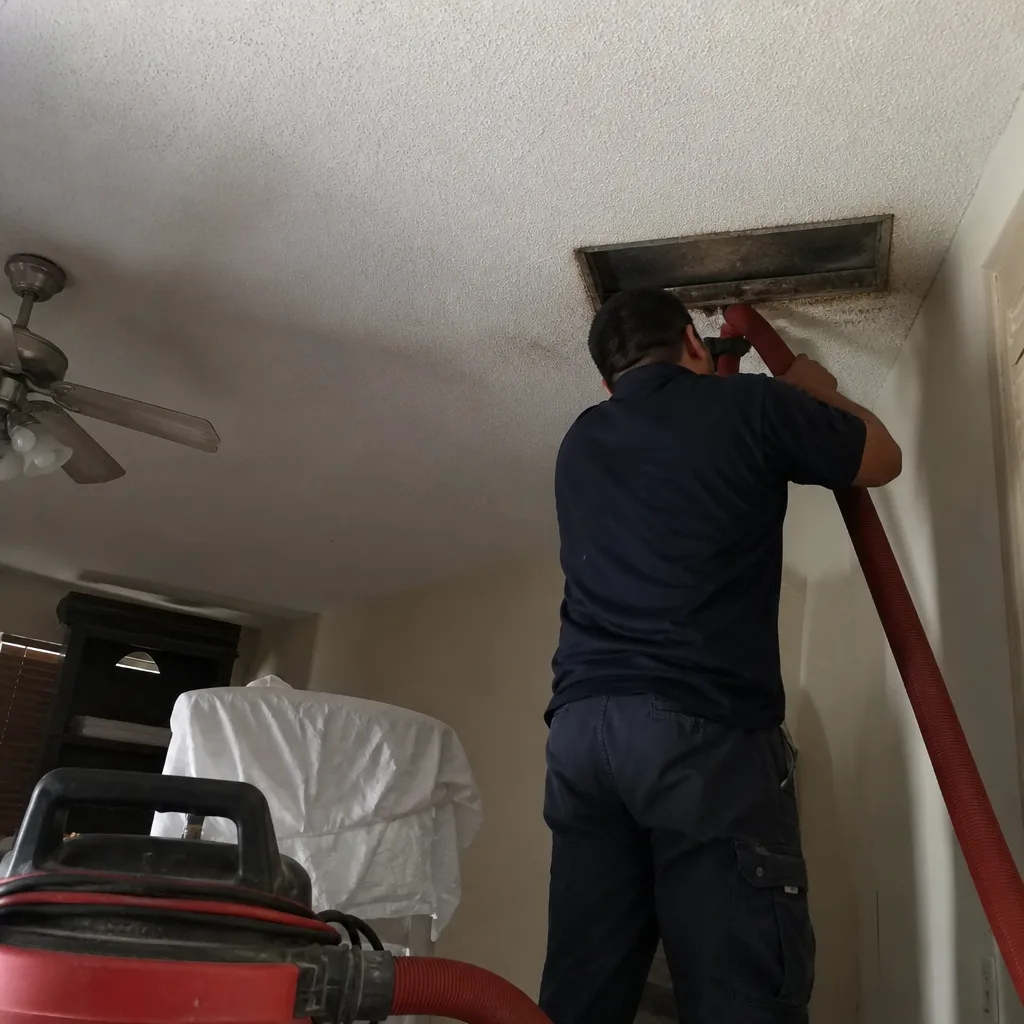
- Higher particle load in return plenums. Returns in high-traffic areas like living rooms and bedrooms accumulate visible dust at the grille faces when the system is working hard.
- More pet dander and hair. Homes with pets see a real spike in return-side accumulation with the summer activity pattern.
- Increased pressure on gaps and joints. A system running longer means more pressure cycles at every connection, which is when small tears and loose joints start to matter.
For property managers, this is the time to check in on rental units. A summer surge can push return ducts into visible accumulation from a tenant’s perspective faster than the property’s maintenance schedule expects. Catching it in July is cheaper than catching it in September after a tenant complaint. Either way, the pattern is consistent: summer is when the load increases, and late summer is when the accumulation has already happened and is ready to be cleared out.
Back-to-School: The Most Practical Annual Cleaning Window
If we had to recommend one window per year for a professional cleaning in a Miramar home, it’s the back-to-school stretch. The reasoning is practical rather than scientific. By late August, the summer surge has already loaded the system, so there’s meaningful work to do. The household routine is about to reset, which makes scheduling easier than at any other point in the year. And the timing lands right after the worst of the seasonal contaminant load and before the post-season check that many homeowners do in the fall.
Here’s how to think about the timing:
- Late August or early September puts the cleaning at the end of the summer load and just before the usual fall check-in on the HVAC system.
- The dry season’s open-window months start soon after, so the system goes into the pollen-and-dust season with a clean starting point.
- Any summer-discovered repair can be handled in the same visit. If the surge exposed a torn flex run or a disconnected joint, it gets fixed before the dry season changes the pressure pattern.
- Scheduling flexibility is better in this window than in the middle of summer’s peak demand.
For a household that wants a simple annual rule, this is it: clean in late summer, check after storm season, and keep an eye on the filter and return grilles in between. That’s a more useful routine for a Miramar home than any fixed multi-year interval, because it’s pegged to what the year here actually does to the system.
What Professional Duct Cleaning Actually Involves
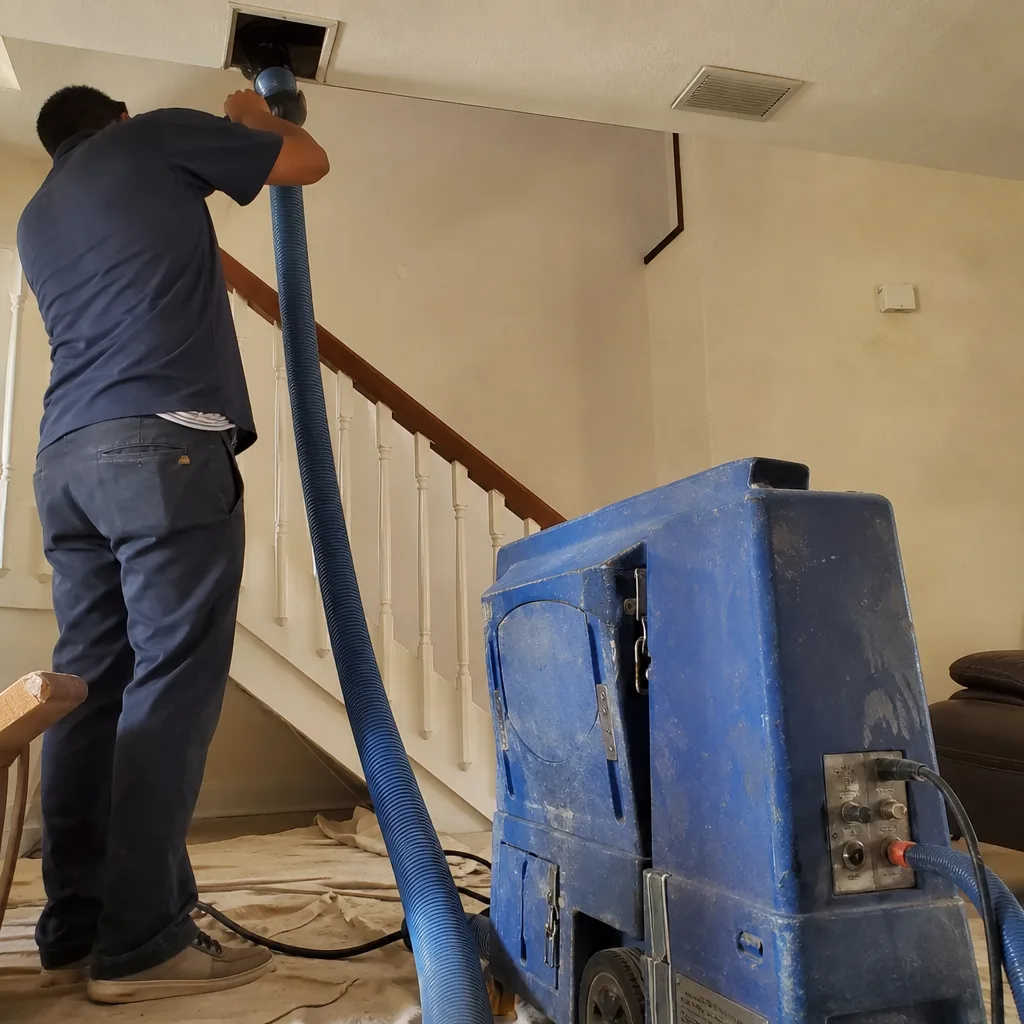
The single biggest gap in residential duct cleaning is between cleaning methods. Many services use a blow-and-go approach: high-pressure air sends dust downstream and calls it done. It looks dramatic in the moment and leaves the debris somewhere in the system. The method we use is different: contact cleaning plus negative pressure, in two stages.
Stage one: agitation
Rotobrush rotary contact-cleaning equipment physically scrubs the interior of the duct runs, breaking loose the accumulation that a blast of air only stirs. It’s the same class of professional equipment used by commercial and industrial duct cleaning firms, and it’s what makes the difference between a real clean and a displaced mess.
Stage two: extraction
Nikro negative-air extraction captures what the brushes loosen. The vacuum holds the system under negative pressure and pulls the released material into HEPA-rated filtration rather than recirculating it through the home. Combined, the two stages physically remove debris rather than relocating it.
During service, Abatement Technologies containment and HEPA filtration keep the work area protected, a remediation-grade safeguard that isn’t typical of residential competitors. The result holds up to inspection, and before-and-after photos are part of how a homeowner knows the work is real. For a deeper look at what a full-service air duct cleaning includes, that page walks through the process step by step.
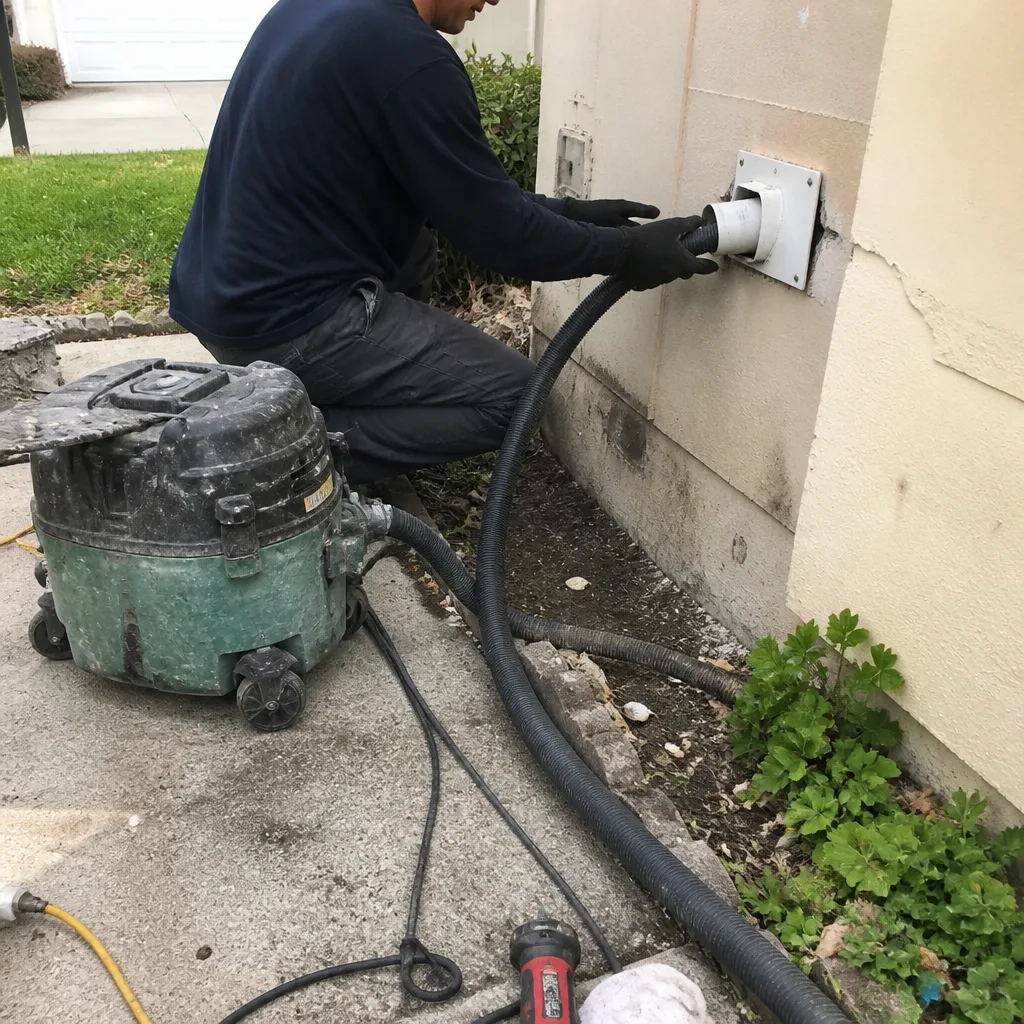
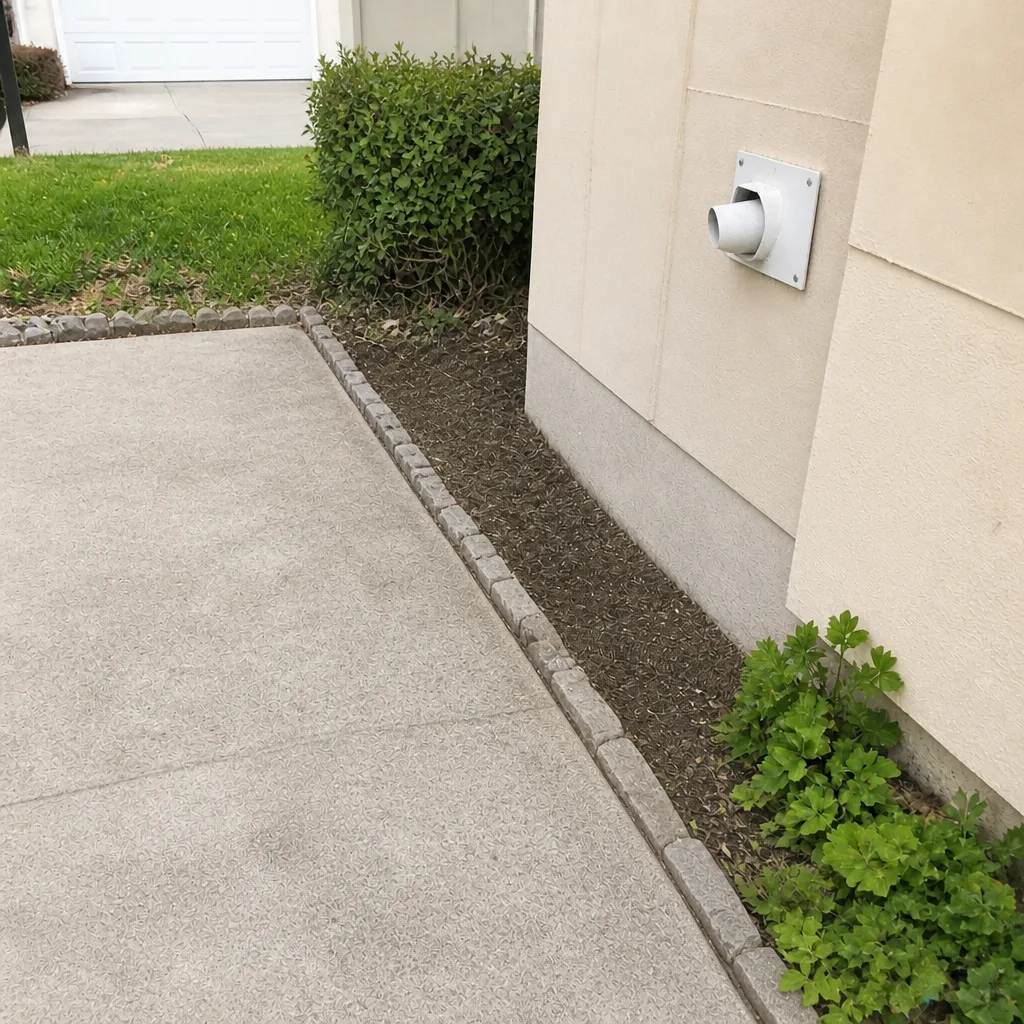
The same professional tooling applies to dryer vent cleaning, which we treat as a fire-safety item, not a housekeeping item. A clogged dryer vent is a genuine fire risk, and the tools that clear it aren’t the tools a handyman carries. And when cleaning reveals damage, Duct Cleaning Miramar handles the repair as part of the same visit, without subcontracting or referral.
What You Can Check Yourself and What Needs a Pro
There’s a useful line between homeowner checks and professional work, and it protects both your system and your time. A homeowner can legitimately check the filter, look at the return grilles, and note what they see. What they shouldn’t do is open the system, disassemble duct runs, or try to clean the interior themselves, which risks damaging the duct liner and creating the leaks a proper cleaning is meant to prevent.
Safe homeowner checks
- Remove and inspect the air filter. Replace it when it’s visibly loaded.
- Look at the return grille faces for visible dust accumulation.
- Note any new noises, musty smells, or airflow changes at registers.
- Check the dryer’s exterior vent flap opens freely when the dryer runs.
- Confirm the outdoor condensate drain is draining.
Work that needs a trained technician
- Opening duct runs to inspect the interior or liner.
- Any contact cleaning of duct interiors.
- Repair of disconnected, crushed, or torn duct sections.
- Diagnosing whether a storm intrusion has affected the system.
- Servicing whole-house filtration and air-handling components.
The rule of thumb: if the work requires opening the system, it needs a technician. Our technicians have up to 13 years of experience on residential and light commercial systems, and the equipment they carry is the reason the job holds up. If you want to schedule a professional cleaning or get a second opinion on what you found during your own check, call (877) 583-7369. We answer 24/7. Fast dispatch from 7am to 7pm.
Common Mistakes to Avoid
- Following a “clean every few years” rule without checking the calendar. A Miramar home with heavy summer occupancy and a storm-season integrity check has different needs than a fixed interval assumes. Peg the work to the local seasons instead of the clock.
- Running the system right after a flood or storm intrusion without inspection. If water reached the duct system, running it can circulate moisture and debris into areas that weren’t affected. Get it evaluated first.
- Skipping the pre-hurricane integrity check. A disconnected joint or torn flex run is easy to catch before the season and much harder to deal with after a storm has moved through. Check integrity while the system is still fully accessible and undamaged.
- Hiring a blow-and-go cleaner. A service that only blasts air through the ducts doesn’t remove the debris. Ask what equipment will be used and whether the method includes contact cleaning and negative-pressure extraction, not just air pressure.
- Ignoring the return side during summer. Return ducts take the highest load June through August. If you’re only checking supply registers, you’re looking at the wrong end of the system.
- Treating the dryer vent as a housekeeping task. A clogged dryer vent is a fire risk, and the tooling that clears it properly isn’t what a handyman brings. Have it serviced with the same care as duct work.
- Assuming low humidity means low dust. The dry season in Miramar often means more open windows and more outdoor particulate entering the system, not less. Check filters more often in the dry months, not less.
See the difference
 Before
 After
 Before
 After
 Before
 After
When to Call a Professional
A professional call is worth making in four scenarios. First, after any weather event that may have compromised the roof, the attic, or any ground-level part of the system. Second, when the summer surge has left visible accumulation at return grilles or the system is running noticeably harder than it did earlier in the season. Third, when you notice airflow changes, musty smells, or a dryer that takes longer than usual to dry a load. Fourth, when the annual back-to-school window arrives and the system hasn’t been cleaned in a year or more. In each case, the visit combines cleaning and a diagnostic look at the air pathway, so the recommendation is based on what’s actually there. Duct Cleaning Miramar offers free estimates in Miramar. Call (877) 583-7369.
Frequently Asked Questions
Once a year is a reasonable default for most Miramar homes, timed to late summer and paired with a storm-season integrity check. Homes with pets, heavy summer occupancy, or recent storm damage may need a mid-year look as well. The right interval depends on what the year did to the system, so a short professional assessment beats a fixed calendar. Call (877) 583-7369 for an exact quote. Estimates are free.
Before, if you can, and inspect after regardless. Pre-season cleaning puts the system in good shape entering storm season, and the integrity check that comes with it catches compromised joints and connections while they’re still easy to repair. After the season, a quick inspection confirms nothing intruded. If a storm event did affect the system, don’t run it before it’s been evaluated.
No. Lower humidity changes the type of contamination entering the system rather than reducing it. Dry-season months in Miramar often mean more open windows and more outdoor particulate pulled into the return ducts through gaps and loose connections. Filters should be checked more often, not less.
A blow-and-go service uses air pressure to push dust downstream without removing it, which can leave the debris in the system or recirculate it through the home. Professional cleaning uses contact cleaning plus negative-pressure extraction, which physically scrubs the duct interior and captures what’s loosened. Ask any cleaner what equipment they use and whether the method includes both agitation and extraction. That single question tells you most of what you need to know.
Yes. Attic-mounted duct runs sit under the roof deck, and damage to shingles, decking, or flashing can let water, debris, and insulation into the attic and into the duct exterior without an obvious sign in the living space. A professional attic inspection is the only reliable way to know. Don’t assume the system is fine just because the interior looks normal.
Both. Air Duct Repair is a named service, so diagnosis and fix happen in the same visit rather than being handed off to a subcontractor. That continuity matters most when cleaning reveals a disconnected joint or a torn flex run, because the repair can be scheduled immediately rather than after a second company is brought in. Call (877) 583-7369 for a free estimate. We answer 24/7. Fast dispatch from 7am to 7pm.
The Bottom Line
Seasonal duct care in Miramar isn’t about turning the system on and off. It’s about matching maintenance to a local year defined by hurricane season, dry months, a summer occupancy surge, and the back-to-school reset. The practical routine that comes out of this guide: clean in late summer, check integrity before storm season and inspect after, watch filters and return grilles through the dry months, and call a professional when the system shows signs of load or storm damage. A clean, intact air pathway is the goal year-round, and professional equipment, not consumer shortcuts, is what holds up. If you’re ready to schedule a cleaning or a consultation, call (877) 583-7369 for a free estimate.
Written by the team at Duct Cleaning Miramar.